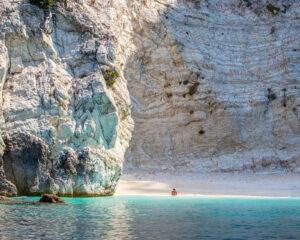
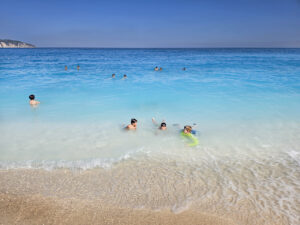
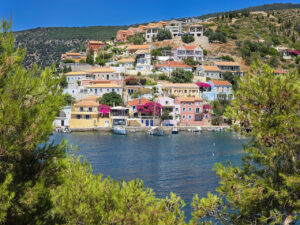
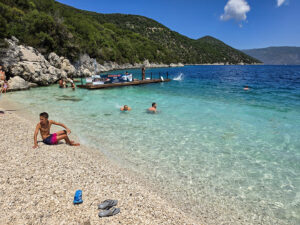
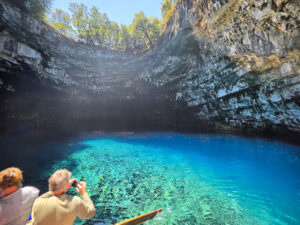
Myrtos Beach is one of the places that makes people choose Kefalonia. The white shoreline, high cliffs and changing blue water create the island’s most recognisable coastal view.
But the photograph does not explain the whole experience.
The viewpoint and the beach are separate stops. The road down is steep and winding. Parking becomes more difficult when demand is high, the pebbles can be uncomfortable, and the open setting means that swimming conditions can change from one visit to another.
During our own trip, Myrtos made the strongest impression from above first. The beach itself was worth visiting, but understanding the access, timing and sea conditions made the day much easier.
This practical Myrtos Beach guide covers the viewpoints, road access, parking, swimming, families, photography, timing and the easiest ways to combine Myrtos with Assos and northern Kefalonia.
⚠ Safety update (July 2026): A landslide brought rocks and debris onto the shore at Myrtos, causing alarm among bathers (no injuries were reported). The authorities placed warning signs and reviewed the site, and experts have said further slides cannot be ruled out. Access to the beach may be temporarily restricted or closed at times.
Before you go, check the current official status, keep well away from the base of the cliffs, and follow all local signs, barriers and closures. This is a developing situation, so treat the practical details below as general background rather than confirmation that the beach is fully open on your date.
Myrtos Beach: the quick answer
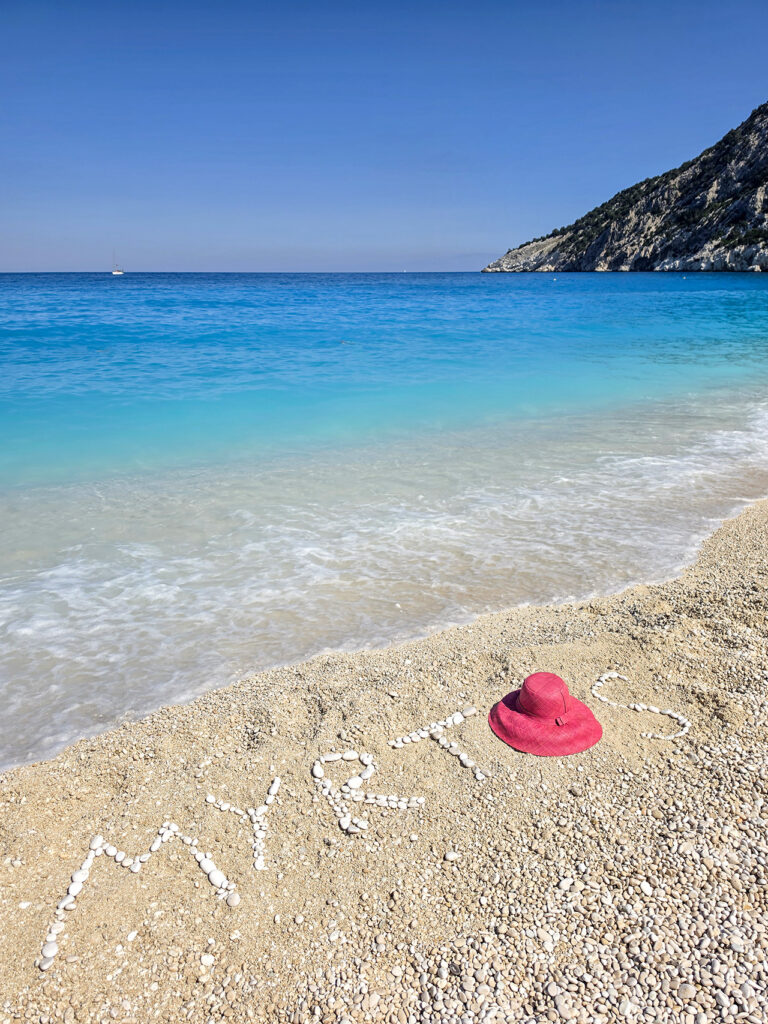
Is Myrtos worth visiting? Yes – though check the current safety status first (see the note above). Even if you do not swim, the view from above is one of Kefalonia’s essential landscapes.
Best time in July and August? Early morning for lower heat and crowd pressure, or late afternoon for softer light. Neither guarantees easy parking.
Best quieter months? May-June and September-October are generally more relaxed than peak summer.
Is there road access? Yes. A steep, winding road descends from the Divarata area to the beach.
Is parking available? Parking is available near beach level, but arrangements and capacity can change. It becomes more pressured in busy periods.
Is Myrtos sandy? No. The beach is mainly white pebbles, with the surface varying across the shoreline.
Is it always suitable for children? No. Families visit, but pebbles, heat, depth and sea conditions should be assessed on the day.
Best nearby combination? Myrtos and Assos form the easiest north-western route.
Our honest recommendation: stop at a viewpoint first, then decide whether conditions and your schedule justify driving down for a swim.
Why Myrtos is different from other Kefalonia beaches
Myrtos is not only a swimming beach. It is a large-scale landscape.
The bay sits beneath steep cliffs on Kefalonia’s north-western coast. From above, the white shoreline and pale sediment make the water appear in changing shades of blue and turquoise.
At beach level, the experience is less polished than the photograph suggests. The shoreline is pebbly, the setting is exposed and the cliffs make the beach feel physically separated from the surrounding villages.
This creates two valid ways to visit:
- Scenic visit: stop at one or both viewpoints and continue towards Assos or Fiskardo.
- Beach visit: drive down, park, swim and allow enough time for the road back up.
You do not have to spend an entire day on the beach to understand why Myrtos matters.
For a wider comparison, read our guide to the best beaches in Kefalonia.
Where is Myrtos Beach?
Myrtos is on the north-western side of Kefalonia, below the main road connecting the central and eastern parts of the island with Assos and the north.
The nearest practical road reference is the Divarata area. The beach is not located inside a walkable resort with accommodation, restaurants and a flat promenade.
This matters when planning the day:
- there is no useful beachfront town to explore on foot;
- the road down and back up is part of the visit;
- food, fuel and other supplies are easier to arrange before descending;
- the beach works best inside a north-western route rather than as an isolated map pin.
If you are deciding which part of the island to use as a base, see our guide to where to stay in Kefalonia.
How far is Myrtos from the main areas?
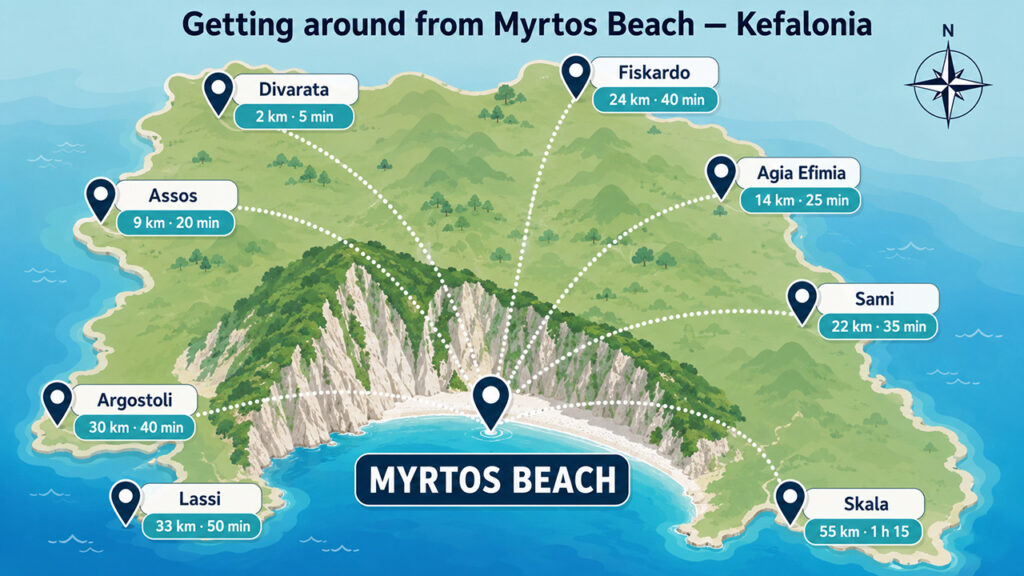
Kefalonia’s mountain roads make journeys feel longer than the map distance suggests, so treat every figure below as an approximate driving guide and check a live map before you set off. The times are for reaching the Myrtos and Divarata area; the beach access road itself may be affected by the current safety situation.
| From Myrtos to | Distance (approx) | Driving time (approx) |
|---|---|---|
| Divarata (village above the beach) | ~2 km | ~5 min |
| Assos | ~9 km | ~20 min |
| Fiskardo | ~24 km | ~40 min |
| Agia Efimia | ~14 km | ~25 min |
| Sami (for Melissani and Drogarati) | ~22 km | ~35 min |
| Argostoli | ~30 km | ~40 min |
| Lassi (Makris & Platis Gialos) | ~33 km | ~50 min |
| Skala | ~55 km | ~1 hr 15 |
Myrtos and Assos are the closest natural pairing. Anything on the east or south coast is a longer drive, which is why trying to combine Myrtos with the far south in one relaxed day rarely works well.
How to get to Myrtos Beach
For most independent visitors, driving is the simplest way to reach Myrtos.
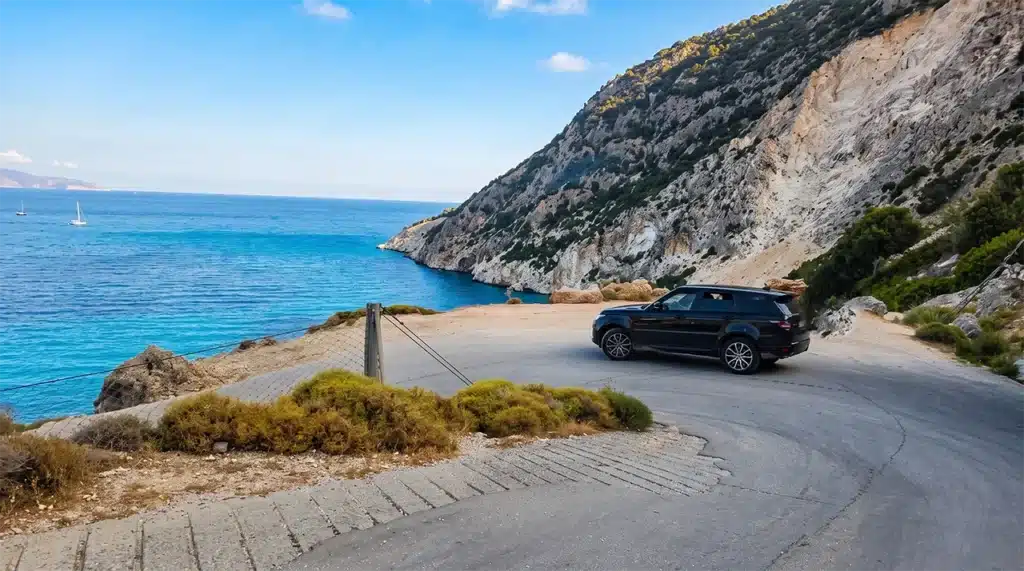
The access road descends from the main road near Divarata through a series of bends towards the bay. The road is paved, but it is steep and should be driven patiently.
Expect:
- a winding descent and climb;
- vehicles moving in both directions;
- slower traffic during busy periods;
- limited opportunities to stop safely on the road itself;
- more pressure near the bottom when parking fills.
Do not stop on a bend to take photographs. Use the recognised viewpoints above the beach or another safe, legal stopping area.
Can you reach Myrtos without a car?
Seasonal buses, organised excursions and taxis may provide alternatives, but routes and timetables change.
An organised excursion can work well if you do not want to drive the access road. The trade-off is that the time on the beach and at the viewpoint is controlled by the tour schedule.
A taxi gives more flexibility, but return transport should be arranged before descending, especially outside the busiest period.
For a full transport comparison, read Do You Need a Car in Kefalonia?
Can you walk to Myrtos Beach?
Myrtos should not be treated as a practical walk from Divarata or nearby accommodation.
The distance on a map does not communicate the steep road, traffic, heat and lack of a comfortable pedestrian route.
Visitors without transport should use a current bus, taxi or organised-tour option rather than assume that walking down and back up will be an easy part of the day.
Myrtos Beach viewpoints: where the famous photograph comes from
The classic Myrtos image is taken from the road above the bay, not from beach level.
Local tourism guides describe two recognised roadside viewing areas: a commonly used southern viewpoint and another viewpoint farther north.
The exact stopping arrangement can change, and space can be limited. Follow signs, keep the road clear and do not copy unsafe parking simply because other cars have stopped.
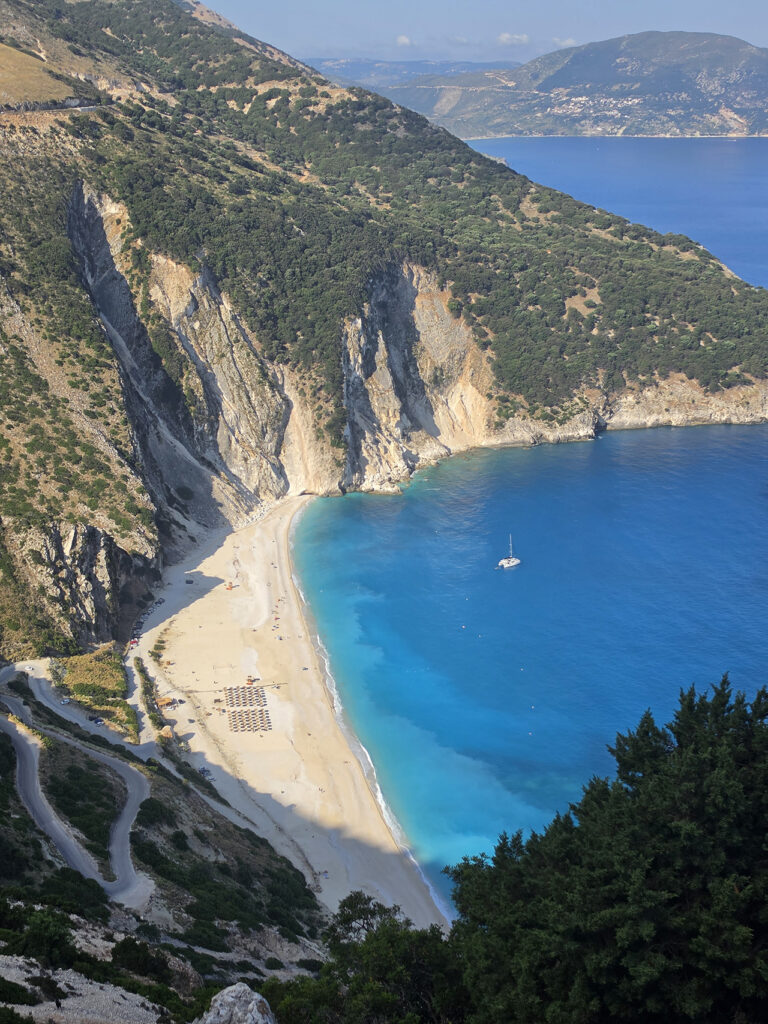
The southern viewpoint
The southern viewpoint is the most familiar angle for many visitors. It shows the broad curve of the beach, cliffs and water below.
It works naturally when travelling from Divarata towards Assos or returning from the north.
This viewpoint can become busy in late afternoon and around sunset. Arrive with enough time to park safely or continue if no legal space is available.
The northern viewpoint
The northern viewing area provides a different angle across the bay and can be useful when the main viewpoint is crowded or when your road route continues towards Assos.
Do not assume that it always has more parking. Conditions and safe stopping space should be assessed on arrival.
Should you visit both viewpoints?
You do not need both to enjoy Myrtos. The main viewpoint is enough for most first-time visitors.
Visit the second only when it fits your driving direction and safe parking is available. Repeatedly turning around on the main road for a slightly different photograph is rarely worth the extra pressure.
Best time for photographs
Late afternoon often produces softer light and stronger colour contrast than the middle of the day. Sunset can also be attractive from the road above the beach.
However, light changes with season, cloud, haze and the position of the cliffs. No exact hour guarantees the same image you saw online.
Morning generally brings lower crowd pressure, but the appearance of the bay may be cooler or partly affected by shadow.
Parking at Myrtos Beach
Parking is available near beach level, but it should not be treated as unlimited or permanently organised in the same way every season.
In July and August, the greatest pressure is usually around the busiest part of the day. Arriving earlier can improve your chances, but there is no hour that guarantees a space.
When parking:
- follow local signs and staff instructions;
- do not block the turning area or road;
- leave enough room for larger vehicles and emergency access;
- avoid stopping on the descent when no legal space exists;
- remember where you parked before walking onto the long shoreline;
- keep valuables out of sight.
If the lower area is full and traffic is difficult, do not force the visit. Use the viewpoint and return at another time or choose a beach in the same broader region.
Parking at the viewpoints
Viewpoint space is much smaller than beach-level parking. It is intended for a brief scenic stop, not a long beach visit.
Keep children away from the road and cliff edge, and do not stand in the carriageway for photographs.
Google Maps can help identify the viewing area, but it cannot confirm that a particular roadside space is legal or available when you arrive.
When is the best time to visit Myrtos Beach?
The best time depends on whether you prioritise swimming, parking, temperature, photography or sunset.
| Time or season | Main advantage | Main consideration |
|---|---|---|
| Early morning | Lower heat and often fewer visitors | Light and cliff shadow vary |
| Late morning to afternoon | Bright beach colours and a full beach day | More heat, traffic and parking pressure |
| Late afternoon | Softer light and possible sunset atmosphere | Viewpoint and road can become busy |
| May-June | Greener landscape and generally lower demand | Sea and seasonal services vary early in the season |
| July-August | Full summer atmosphere | Highest crowd and parking pressure |
| September-October | Generally more relaxed than peak summer | Weather and services become less predictable later in the season |
Best time for swimming
There is no reliable daily rule that guarantees calm water.
Wind direction, swell and local weather matter more than the clock. Check the beach when you arrive and keep an alternative plan if the water looks uncomfortable for your group.
Best time for lower crowds
Early morning is the most sensible choice during peak season when lower heat and easier parking are priorities.
Late afternoon can also feel more comfortable after some day visitors leave, but sunset traffic may increase around the viewpoints.
Best time for sunset
Myrtos faces the open Ionian side of Kefalonia, making late light and sunset an important part of the experience.
For sunset, decide whether you want to remain on the beach or return to the viewpoint. Do not rush up the winding road at the last minute.
If the viewpoint is full, continue safely rather than parking on a bend or blocking traffic.
What is swimming at Myrtos actually like?

Myrtos is a white-pebble beach rather than a soft-sand resort beach.
The water can look extremely clear from above, but clarity does not indicate depth or calm conditions. The seabed and shore break can change across the bay and from one day to another.
Before entering:
- watch the water for several minutes;
- check whether waves are breaking strongly at the shoreline;
- look for local flags, warnings or lifeguard instructions where present;
- enter only within your swimming ability;
- keep children close;
- do not assume the conditions near one end are identical across the whole beach.
If the sea is rough, the viewpoint still makes the journey worthwhile. Myrtos does not have to become a swimming day.
Pebbles, footwear and comfort
The pale pebbles are part of the visual appeal, but they can become hot and uncomfortable.
Water shoes can help visitors who dislike walking on pebbles. A thicker beach mat can also be more comfortable than a thin towel.
Be careful when the waves move larger pebbles around your feet near the shoreline.
Shade and facilities
Seasonal services may include some combination of sunbeds, umbrellas, basic refreshments, toilets, changing areas or lifeguard coverage.
Do not rely on every service being available on your date. Bring:
- water;
- sun protection;
- personal shade if you need it;
- food or snacks;
- footwear suitable for pebbles;
- a bag for taking rubbish away.
The cliffs do not provide safe, consistent shade for the whole beach. Follow any posted warning signs about rockfall or unstable cliffs, and avoid sitting directly below them.
Is Myrtos Beach suitable for children?
Families visit Myrtos, but it should not be labelled automatically suitable for every child.
The main considerations are:
- pebbles rather than soft sand;
- possible shore break and changing water movement;
- limited natural shade;
- heat on the beach surface;
- the winding access road;
- parking pressure during busy periods;
- the distance from extensive resort services.
Myrtos may work well for confident older children on a calm day. For toddlers, weaker swimmers or families wanting shallow, predictable water, another beach may produce an easier day.
Makris Gialos, Platis Gialos, Xi or a suitable section of Skala may be more practical starting points, depending on current conditions.
Myrtos Beach for visitors with limited mobility
The road allows visitors to reach beach level by vehicle, but the beach surface itself is uneven and pebbly.
The exact distance between parking and a comfortable place on the shoreline depends on where you find a space and current arrangements.
Visitors with limited mobility should:
- avoid relying on the beach as a guaranteed easy-access stop;
- consider enjoying the view from above;
- check current local access information;
- bring suitable support and footwear;
- avoid the hottest and busiest hours.
The viewpoint can provide the essential Myrtos experience without the descent onto the pebbles.
How long should you spend at Myrtos?
The right amount of time depends on the sea and the rest of your route.
Viewpoint only
Allow enough time for a safe stop, photographs and traffic. Do not treat the viewpoint as a quick roadside jump out of the car.
Viewpoint and short swim
A few hours can work when Myrtos is combined with Assos. Include time for parking, walking, changing and the road back up.
Full beach day
A full day makes sense if the water is suitable, you have supplies and Myrtos itself is the main purpose of the route.
It is less sensible when your plan also includes a slow lunch in Assos, Fiskardo, several viewpoints and another major beach.
Myrtos and Assos: the best combination
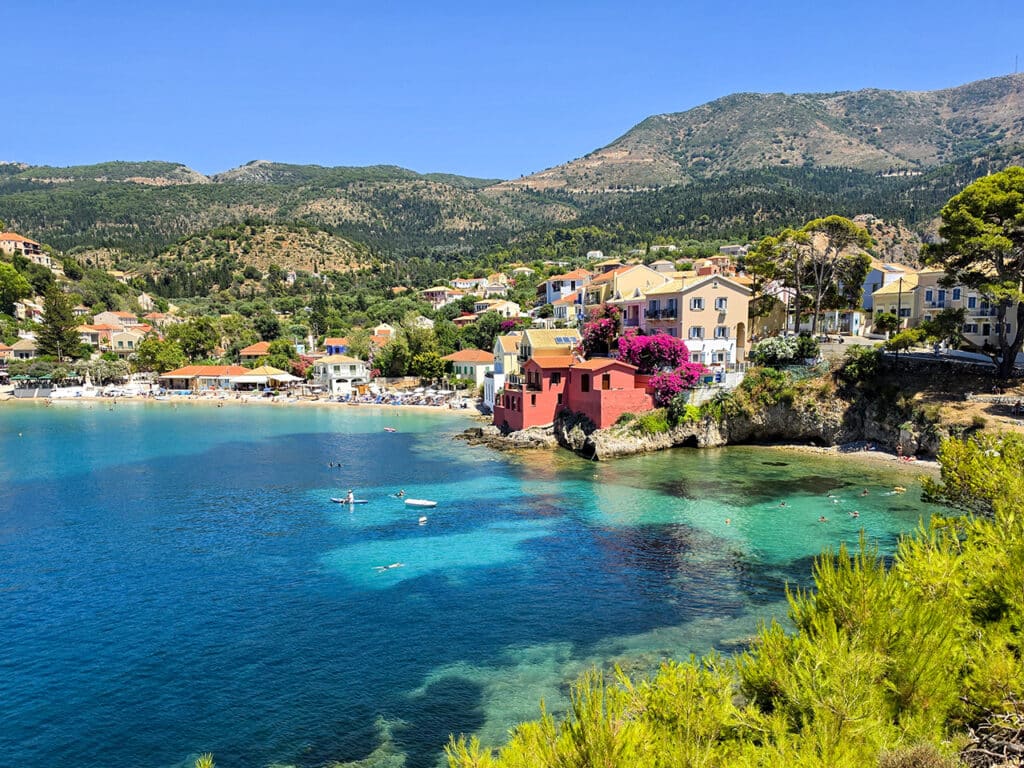
Myrtos and Assos form a natural north-western day because they are part of the same broader route.
A balanced plan is:
- visit the Myrtos viewpoint;
- decide whether to swim based on conditions;
- continue to Assos for a walk, meal or later swim;
- return without forcing another distant region into the day.
Visit Myrtos earlier when parking and beach time matter most. Visit Assos later if you want lunch and a slower village atmosphere.
Alternatively, visit Assos first and return towards Myrtos for late-afternoon light. This works only if you remain flexible about parking and swimming.
Can you add Fiskardo?
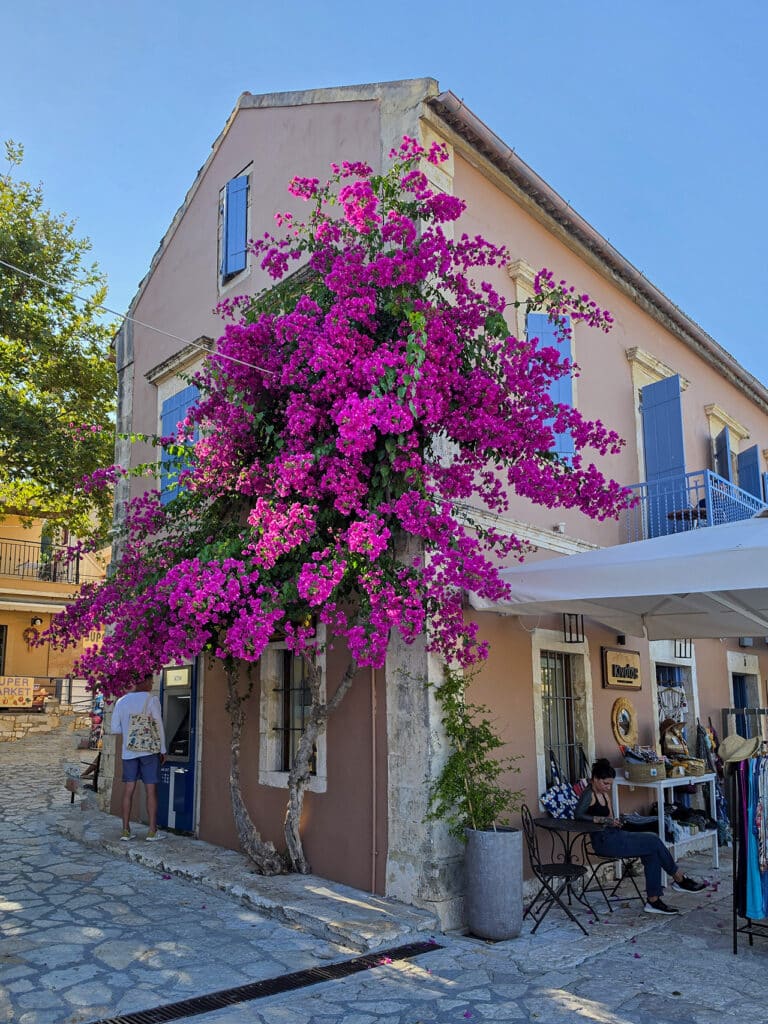
Yes, but Myrtos, Assos and Fiskardo create a longer day.
Adding Fiskardo is easier when:
- you start early;
- Myrtos is mainly a viewpoint or shorter swim;
- you do not plan the Assos castle walk;
- your accommodation is in the north or east;
- your group is comfortable with a substantial road day.
For many first-time visitors, enjoying Myrtos and Assos properly is better than briefly checking all three places.
For a broader route plan, read our Kefalonia travel guide.
What to bring to Myrtos Beach
- plenty of drinking water;
- sun protection and personal shade;
- water shoes if pebbles are uncomfortable;
- a thicker mat or padded beach chair;
- food or snacks;
- a dry bag or waterproof pouch;
- a car charger or power bank;
- basic first-aid supplies;
- a bag for all rubbish;
- offline maps in case mobile coverage is inconsistent.
Do not leave valuables visible in the car.
What to do if Myrtos is windy or crowded
A difficult beach day does not mean the route has failed.
You can:
- visit the viewpoint and continue to Assos;
- choose a smaller cove closer to Fiskardo;
- move towards Agia Efimia or Sami for a different coast;
- use the day for villages and return to Myrtos another morning;
- select a beach nearer your accommodation rather than crossing the island again.
Do not enter rough water simply because Myrtos was the main item on the itinerary.
Common mistakes at Myrtos Beach
Going straight to the beach and missing the viewpoint
The view from above is a separate and essential part of Myrtos.
Assuming the water will be calm
The open setting means conditions can change. Assess the beach when you arrive.
Arriving with no water or shade
Seasonal services should not be treated as guaranteed.
Parking unsafely at the viewpoint
No photograph justifies blocking the road, standing on the carriageway or stopping on a bend.
Treating the pebbles like soft sand
Footwear and a thicker mat can make a significant difference.
Planning Myrtos, Assos, Fiskardo and Melissani as a relaxed day
These places belong to different routes. A car provides access, but it does not make the island smaller.
Leaving the beach at the exact moment of sunset
Driving up the winding road in a concentrated departure rush can be stressful. Allow time or watch sunset from a safe viewpoint instead.
Frequently asked questions
Is Myrtos Beach worth visiting?
Yes. The viewpoint alone is one of Kefalonia’s essential landscapes. Whether the beach itself suits you depends on the sea, heat, pebbles and your route.
Is there parking at Myrtos Beach?
Parking is available near beach level, but capacity and organisation can change. It becomes more pressured during busy periods, so arrive earlier when possible and follow local signs.
Where is the Myrtos Beach viewpoint?
Recognised roadside viewpoints are located above the bay on the main road around the Divarata and Assos route. Use marked or clearly safe stopping areas rather than parking on bends.
What is the best time to visit Myrtos Beach?
Early morning is useful for lower heat and crowd pressure. Late afternoon is attractive for softer light and sunset. May-June and September-October are generally quieter than July-August.
Is Myrtos Beach sandy?
No. Myrtos is mainly a white-pebble beach. Suitable footwear can make walking and entering the water more comfortable.
Is Myrtos Beach safe for children?
Families visit, but the beach is not automatically suitable for every child or every day. Check waves, depth, heat and your child’s swimming ability.
Can you walk to Myrtos Beach?
It should not be treated as a practical walk from Divarata. The road is steep, winding and used by vehicles. Use current transport, a taxi, a tour or a car.
Are there sunbeds and toilets at Myrtos?
Seasonal facilities may operate, but availability can change. Bring water, sun protection and the supplies you need rather than relying on a complete service.
Can you visit Myrtos and Assos in one day?
Yes. They form a natural north-western route. The amount of beach time determines whether the day remains relaxed.
Can you visit Myrtos at sunset?
Yes. Late light can be attractive from the beach or viewpoint, but parking and traffic may become busier. Do not rush or stop unsafely to catch the final light.
Final verdict
Myrtos deserves its reputation, but it is not a simple resort beach.
Visit the viewpoint even if you are unsure about swimming.
Arrive earlier in peak season when parking and lower crowd pressure matter most. Choose late afternoon when softer light matters more, while accepting that the viewpoints may be busy.
Assess the sea rather than assuming the famous blue water will always be calm.
Bring water, sun protection and footwear suitable for pebbles. Treat seasonal facilities as a bonus rather than a guarantee.
Combine Myrtos with Assos for the most practical first-time route. Add Fiskardo only when you are comfortable with a longer driving day.
Myrtos is worth visiting not because it is automatically the easiest beach in Kefalonia, but because the scale of the landscape is difficult to understand until you see it from above.