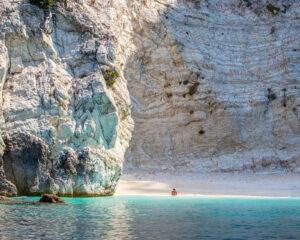
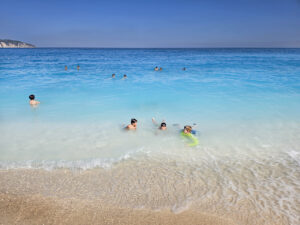
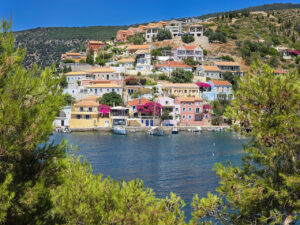
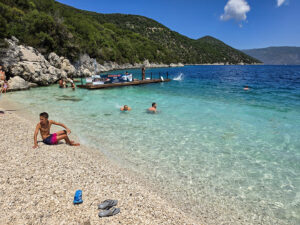
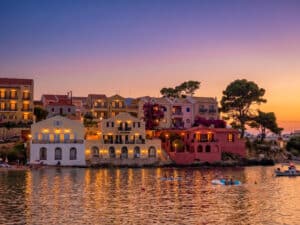
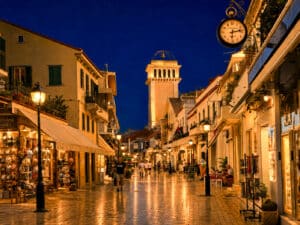
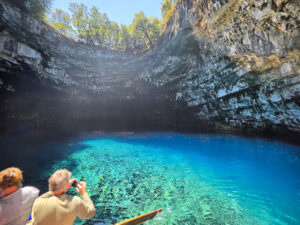
Kefalonia is not difficult to visit, but it is surprisingly easy to plan it badly.
The island is larger, greener and more spread out than many first-time visitors expect. Its famous beaches, villages, caves and ports are located on different sides of the island, often connected by winding roads rather than quick coastal routes.
We spent our own trip driving around Kefalonia from the Lassi and Argostoli area. The biggest lesson was simple: trying to see everything is less important than grouping places properly and leaving enough time to enjoy them.
This practical Kefalonia travel guide explains where to stay, whether you need a car, how to arrive, how many days to allow, which places work well together and which planning mistakes can make the holiday unnecessarily tiring.
Kefalonia for first-time visitors: the quick answer
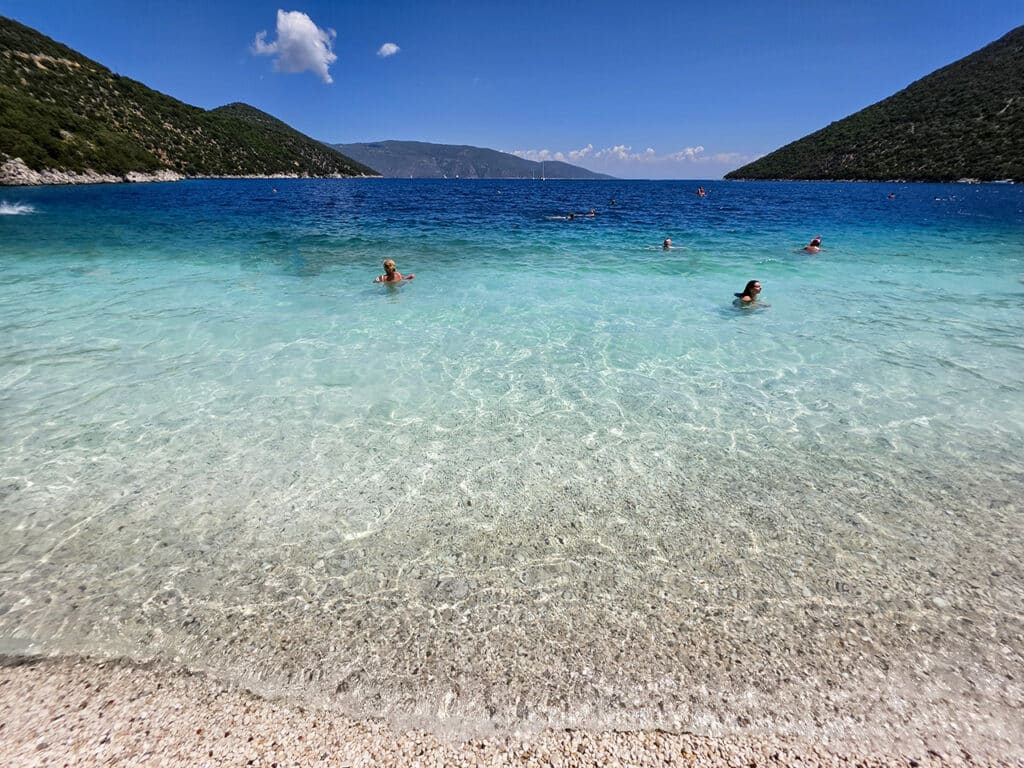
How many days? Five days can cover the main highlights, but seven days gives you a much better balance between exploring and relaxing.
Do you need a car? Not for every type of holiday, but a car is the easiest way to explore the island independently.
Best first-time base? Lassi for easier beach access or Argostoli for restaurants, evening walks and everyday services.
Best time to visit? May-June and September-October are generally more relaxed. July and August offer the full summer atmosphere but bring more visitors and pressure on popular places.
Most important planning rule? Group places by region instead of crossing the island repeatedly.
Can you visit without a car? Yes, especially from Argostoli, Lassi or Skala, but your freedom to reach beaches and villages will be more limited.
Biggest mistake? Treating Kefalonia like a small island where every attraction is close to every resort.
Is Kefalonia a good choice for your first Greek island holiday?
Kefalonia works particularly well for travellers who enjoy a combination of beaches, scenic drives, small villages, relaxed evenings and days that feel different from one another.
It is less suitable for visitors who want to land, walk everywhere and never think about transport. There are areas where a mostly car-free holiday is possible, but the island’s most recognisable sights are widely separated.
Kefalonia is a strong choice if you want:
- dramatic beaches and viewpoints;
- a mix of resorts, towns and small harbour villages;
- the freedom of a road-trip-style holiday;
- quiet days rather than intense nightlife;
- natural attractions such as Melissani and Drogarati;
- local food, Robola wine and traditional villages;
- the option to combine beach days with sightseeing.
Think more carefully before choosing Kefalonia if:
- you do not want to drive at all;
- you expect every famous beach to have effortless access and extensive facilities;
- you want a compact old town to occupy most of the holiday;
- you plan to see the entire island in two or three days;
- you dislike winding roads or regular changes of scenery and pace.
The island rewards realistic planning. It becomes frustrating mainly when visitors try to force too much into each day.
How many days do you need in Kefalonia?

For most first-time visitors, five to seven days is a sensible range.
Three or four days can work if Kefalonia is part of a longer Ionian trip, but you will need to choose priorities. You may see Myrtos, Assos, Fiskardo and Melissani, yet have little time left for relaxed beach days or the Paliki Peninsula.
Five days allows you to cover several major areas without turning every day into a full island tour.
Seven days is better if you want to:
- explore both the north and east;
- spend time in Argostoli and Lassi;
- visit Paliki or the southern resorts;
- allow for weather changes;
- leave at least one day for a boat trip or an unplanned beach;
- avoid packing every major attraction into consecutive road days.
For stays longer than a week, a split stay can make sense. For short trips, changing accommodation often creates more work than it saves.
Where should first-time visitors stay?

Your accommodation area has a major effect on how much you drive, where you spend your evenings and how easily you can reach the places that matter most to you.
For a detailed area-by-area comparison, read our guide to where to stay in Kefalonia.
| Area | Best for | Main compromise |
|---|---|---|
| Lassi | First visits, nearby beaches, families | Practical but tourist-oriented |
| Argostoli | Restaurants, evenings and services | Not a beach resort |
| Sami | Melissani, Antisamos and the east coast | More practical than atmospheric |
| Agia Efimia | Quiet harbour stay and north-east exploring | Small and easier with a car |
| Skala | Resort-style beach holidays | Far from the north-west |
| Fiskardo | Couples and harbour atmosphere | Far north and less central |
| Assos | Scenery and slow stays | Very small with limited services |
| Lixouri | Paliki beaches and local town life | Less convenient for the east |
Our recommendation: choose Lassi if beach access matters most, or Argostoli if you want restaurants, evening walks and easier everyday logistics.
Do not choose a base only because it looks beautiful in photographs. Assos and Fiskardo are memorable, but they are specific choices rather than universal solutions.
How to get to Kefalonia
Kefalonia can be reached by air or ferry. The best option depends on where you are travelling from, whether you want your own car and which part of the island you plan to visit first.
Arriving by plane
Kefalonia Airport is located on the south-western side of the island, close to Lassi and within easy reach of Argostoli.
The airport receives domestic services and seasonal international flights, but destinations and frequencies change through the year. Always check the current schedule directly with the airline or airport.
Taxi services and car-rental desks operate at the airport. A public bus service also runs according to current timetables, but do not assume it will meet every flight.
If you arrive late, Lassi or Argostoli can be convenient for the first night because they avoid an immediate transfer to the far north or east.
Arriving by ferry from mainland Greece
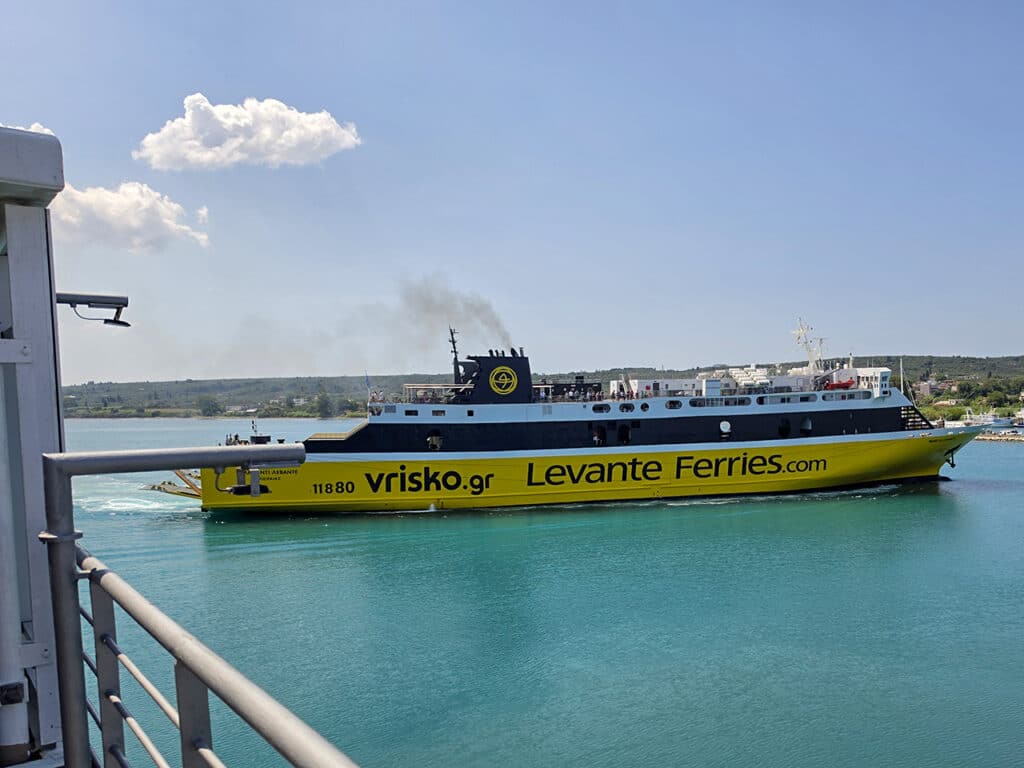
The best-known mainland route connects Kyllini with Poros in south-eastern Kefalonia. It is especially useful for visitors bringing their own car.
Patras can also connect with Sami under published ferry schedules. Availability and frequency can change by season, so check the operator before building your route around it.
Your arrival port matters:
- Poros is convenient for Skala and the south-east;
- Sami is convenient for Melissani, Antisamos, Agia Efimia and the east;
- neither port should automatically determine your base for the entire holiday.
Arriving from Lefkada
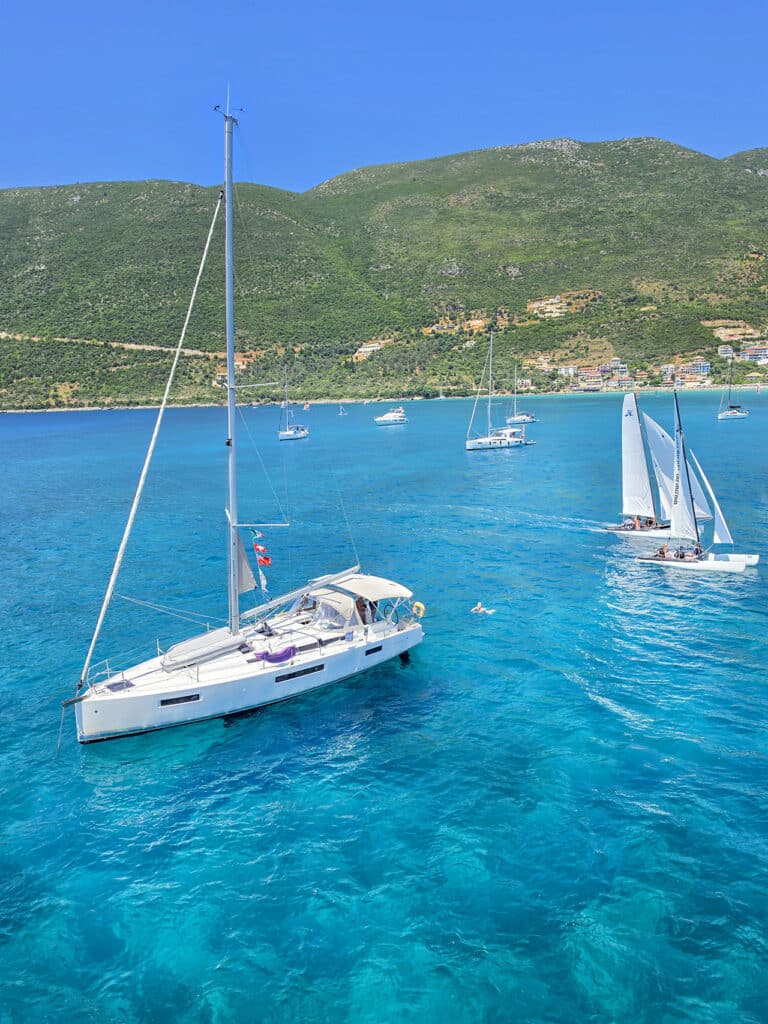
A seasonal ferry connects Vasiliki in Lefkada with Fiskardo in northern Kefalonia. This is useful for island hopping, especially with a car, but the route is seasonal and schedules change throughout the year.
If you arrive in Fiskardo, consider whether beginning in the north will reduce unnecessary driving. It may be more efficient to explore Fiskardo, Assos and Myrtos before moving south.
Do you need a car in Kefalonia?
A car is not mandatory for every holiday, but it is the simplest way to explore Kefalonia at your own pace.
The island has public bus routes linking Argostoli with a number of towns, villages and attractions. However, schedules vary by season and day, and an existing route does not necessarily offer the flexibility needed for beach hopping or sunset stops.
A car is especially useful if your plans include:
- Myrtos and Assos;
- Fiskardo and the northern villages;
- Melissani, Drogarati and Antisamos;
- Petani, Xi and the Paliki Peninsula;
- isolated accommodation;
- multiple viewpoints and beaches in one trip.
You can manage without a car if you:
- stay in Argostoli, Lassi or Skala;
- are happy spending most days in one area;
- use taxis for selected journeys;
- book organised excursions;
- take boat trips rather than trying to reach every beach by road.
If renting a car, choose a size you are comfortable using on narrower village roads and in busy parking areas. A very large car can make luggage easier but parking harder.
The easiest way to plan Kefalonia: divide the island into regions
The most efficient first trip is not a list of attractions. It is a series of regional days.
Avoid driving north in the morning, returning south for lunch and crossing east again before sunset. Kefalonia is more enjoyable when each day has one clear direction.
Argostoli, Lassi and the south-west
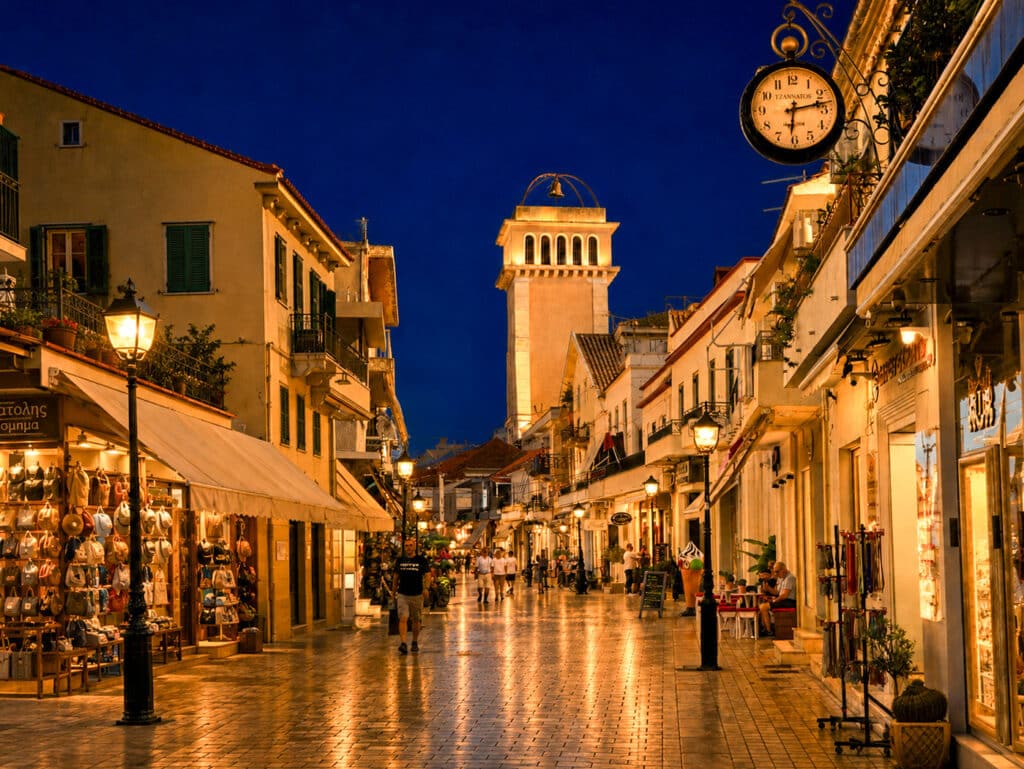
This is the easiest area for many first-time visitors to understand.
Combine:
- Argostoli waterfront and town centre;
- De Bosset Bridge and the Koutavos area;
- Lassi;
- Makris Gialos and Platis Gialos;
- nearby coastal viewpoints and an evening in Argostoli.
This area works well for arrival day, departure day or a lower-driving day between longer excursions.
Myrtos, Assos and the north-west
Myrtos and Assos make a natural combination. Fiskardo can be added, but doing all three properly creates a long day.
A realistic choice is:
- Myrtos viewpoint and beach time, followed by Assos;
- or Myrtos viewpoint, Assos and Fiskardo with less time for swimming;
- or a separate northern day for Fiskardo and nearby coves.
Do not judge the day only by distances on the map. Stops, parking, photographs, winding roads and meals all add time.

Sami, Melissani, Drogarati and Antisamos
The east-coast attractions work well together because they are concentrated around Sami and Karavomylos.
A typical day can include:
- Drogarati Cave;
- Melissani Lake;
- lunch or a walk in Sami;
- Antisamos Beach;
- Agia Efimia if time and energy allow.
Melissani is one of the island’s busiest attractions. Opening hours, queues and ticket arrangements can change, so verify current information before visiting.

Lixouri and the Paliki Peninsula
Paliki deserves its own day rather than being added casually to an eastern or northern route.
You can reach Lixouri by road or use the local ferry from Argostoli, subject to the current timetable.
Possible priorities include:
- Lixouri town;
- Petani Beach;
- Xi Beach;
- smaller western beaches and villages;
- an evening return by ferry if the schedule suits your plans.
Choose one main beach rather than trying to visit every named location on the peninsula.
Lourdas, Skala and the south-east
The southern and south-eastern coast works well for resort days, longer beach stops and a slower itinerary.
Skala and Poros also make sense if your ferry arrives in Poros. Lourdas and Trapezaki can be combined with nearby beaches, but slopes and exact access routes matter.
If you stay in Skala, accept that the north-west is a full excursion rather than a quick trip.
What should first-time visitors prioritise?
You do not need to see every beach or village to understand Kefalonia.
For a balanced first visit, prioritise a mix of landscapes rather than ten similar stops.
Myrtos
Myrtos is the island’s most recognisable beach landscape. Even visitors who do not plan a long swim should stop at the official roadside viewpoints when conditions permit.
The beach is exposed, and sea conditions can change. Check the water, wind and local advice rather than assuming every day is suitable for swimming.
Assos
Assos is small, scenic and best enjoyed without rushing. Parking and access can require patience during busy periods.
It works well with Myrtos, but adding a long castle walk, a slow lunch and Fiskardo to the same day may be too much for some travellers.
Fiskardo
Fiskardo is worth visiting for its harbour, preserved architectural character and northern atmosphere.
It is not only a place to photograph quickly. Leave time for a waterfront walk, a meal or one of the nearby coastal areas.
Melissani and Drogarati
The two caves provide a change from beach-focused days and fit naturally into an east-coast route.
Melissani includes a short boat experience, while Drogarati involves steps and a cave interior. Visitors with mobility concerns should check current accessibility information before travelling.
Antisamos
Antisamos is a natural addition to a Sami day. Rather than treating it as a quick photo stop, allow enough time to swim and recover after visiting the caves.
Argostoli
Argostoli is not only a base. It gives the trip an urban evening, a waterfront walk, restaurants and a view of everyday island life beyond the beach resorts.
One place beyond the obvious highlights
Choose one additional area based on your interests:
- Petani or Xi if Paliki interests you;
- Skala for a resort-style day;
- Lourdas for a quieter southern beach area;
- Mount Ainos for nature and cooler mountain scenery;
- a boat trip for beaches that are difficult or impossible to reach comfortably by road.
A realistic first-time plan for seven days
This is not a strict itinerary. It is a framework that avoids unnecessary island crossings.
| Day | Main area | Suggested focus |
|---|---|---|
| 1 | Argostoli and Lassi | Arrival, beaches, waterfront and an easy evening |
| 2 | North-west | Myrtos and Assos, with Fiskardo only if you want a full driving day |
| 3 | East coast | Drogarati, Melissani, Sami and Antisamos |
| 4 | Flexible beach day | Return to a favourite beach or stay near your accommodation |
| 5 | Paliki | Lixouri with Petani or Xi |
| 6 | South or boat trip | Lourdas, Skala, Poros or an organised sea excursion |
| 7 | Buffer day | Weather backup, missed place, local food or a final relaxed swim |
The buffer day is important. Weather, wind, ferry schedules, tiredness and unexpected discoveries can all change the plan.
A first trip should not feel like a test of how many map pins you can complete.
When is the best time to visit Kefalonia?
Kefalonia has a clear summer season, but the best month depends on what you want from the trip.
May and June
These months are generally greener and less crowded than peak summer. They work well for driving, sightseeing and combining beaches with villages.
Early in the season, some tourism services and sea conditions may differ from midsummer, so check the facilities that matter to you.
July and August
This is the busiest period, with the fullest resort atmosphere and the greatest demand for accommodation, rental cars, ferries and popular attractions.
Book important parts of the trip earlier, start road days sooner and expect more pressure around Myrtos, Assos, Fiskardo and Melissani.
September and October
September often combines warm conditions with a calmer feel than August. October can still work well, but weather and seasonal services become less predictable as the month progresses.
Always check current ferry routes, attraction opening hours and local weather close to the trip.
What should you book in advance?
Not every part of a Kefalonia trip requires advance booking, but peak-season availability can affect the logistics of the holiday.
Consider arranging these early:
- Accommodation: especially for August, Fiskardo, Assos or specific beachfront properties.
- Rental car: particularly if you need an automatic, a larger family car or collection at the airport.
- Vehicle ferry: when travelling on a fixed date or during a busy period.
- Boat rental or organised cruise: if a specific route or day matters.
- Late-arrival check-in: confirm instructions before travelling.
For caves, museums and seasonal attractions, check official or local information shortly before your visit rather than relying on an old blog post.
What to pack for Kefalonia
A few useful items make beach and road days easier:
- comfortable footwear for villages, viewpoints and caves;
- water shoes if you prefer them on pebble beaches;
- a hat, sunscreen and refillable water bottle;
- shade for less organised beaches;
- a light layer for evenings, boat trips or mountain areas;
- a car charger or power bank;
- offline maps in case mobile coverage becomes inconsistent;
- a small bag for wet beach items;
- basic first-aid supplies.
Do not leave valuables visible inside a parked car, and do not block access roads or informal turning areas near beaches.
Food and local products worth trying
Kefalonia has enough local character to make food part of the trip rather than an afterthought.
Look for:
- Kefalonian meat pie: one of the island’s best-known dishes;
- Robola wine: the island’s signature white wine;
- local cheeses and olive oil;
- fresh fish and seafood;
- almond sweets such as mandoles;
- local savoury pies and slow-cooked dishes.
Restaurants around Fiskardo and prime waterfront locations can feel different in price and atmosphere from village tavernas or local places in Argostoli and Lixouri. Read menus before sitting down rather than assuming every area offers the same experience.
Common mistakes first-time visitors make
Trying to see the whole island too quickly
Kefalonia is not a checklist destination. Long driving days become tiring when repeated without a rest day.
Choosing accommodation only by the view
A beautiful villa may be far from restaurants, at the top of a steep road or badly placed for your priority attractions.
Trusting map distance without checking the route
A short-looking journey can involve winding roads, village traffic, parking searches and stops at viewpoints.
Assuming public transport works like a city network
Bus routes exist, but schedules may not support spontaneous multi-stop sightseeing.
Planning Myrtos, Assos, Fiskardo and Melissani as a relaxed day
It may be possible to pass through all of them, but that is different from enjoying them. Choose between depth and quantity.
Ignoring wind and sea conditions
An exposed beach can feel very different from one day to the next. Keep an alternative beach or sightseeing plan.
Forgetting where the ferry arrives
Poros, Sami and Fiskardo are in different parts of Kefalonia. The arrival port can affect your first and final day significantly.
Leaving no flexible day
A buffer day protects the trip from weather changes, tiredness and attractions that take longer than expected.
Frequently asked questions
How many days are enough for Kefalonia?
Five days can cover several major highlights, but seven days gives most first-time visitors a better balance between sightseeing, beach time and flexible planning.
Do I need a car in Kefalonia?
You do not need a car for every type of holiday, especially if you stay in Argostoli, Lassi or Skala. However, a car is the easiest way to explore beaches, villages and viewpoints independently.
What is the best area for a first visit?
Lassi is a convenient choice for nearby beaches, while Argostoli is better for restaurants, evening walks and everyday services. Sami and Agia Efimia work well when the east and north are your priorities.
Can I visit Kefalonia without renting a car?
Yes, but choose your base carefully and expect to use buses, taxis, organised tours or boat trips. Public transport routes and frequencies vary by season.
What is the best month to visit Kefalonia?
May-June and September are strong choices for travellers who want warm-season conditions with fewer visitors than peak summer. July and August offer the busiest and most complete summer season.
Is Kefalonia suitable for families?
Yes, particularly when the accommodation, beach access and driving plan are chosen carefully. Lassi and Skala are straightforward options, but the exact property location matters more than the resort name alone.
Should I stay in one place or split the trip?
One base is simpler for short holidays. A split stay can help on trips longer than a week, especially when combining the south-west with Fiskardo, Assos, Sami or Agia Efimia.
Can I take my car to Kefalonia?
Yes. Vehicle ferries serve Kefalonia from mainland Greece and seasonal routes connect neighbouring islands. Check the current operator timetable and vehicle-booking requirements before travelling.
Is Kefalonia easy to drive around?
The main roads connect the island’s major areas, but routes can be twisting and slower than the map suggests. Drive patiently, avoid rushing and check parking arrangements at your accommodation.
What should I not miss on a first visit?
A balanced first trip usually includes Myrtos, Assos or Fiskardo, the Sami and Melissani area, Argostoli, at least one relaxed beach day and one additional region chosen according to your interests.
Final verdict
Kefalonia is a rewarding island for first-time visitors, but it should not be planned like a compact resort.
Allow enough days, choose your base according to your priorities and divide the island into regional routes.
Use a car if you want maximum freedom, but do not turn every day into a race between distant attractions.
For most first visits, Lassi or Argostoli provides the easiest start. From there, build separate days around the north-west, the east coast, Paliki and the south.
The best Kefalonia holiday is not the one where you see the most places. It is the one where the island never feels like hard work.