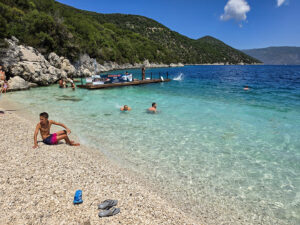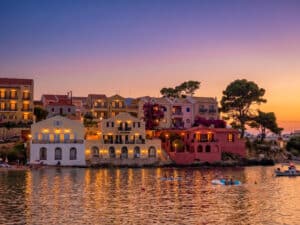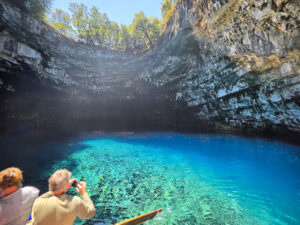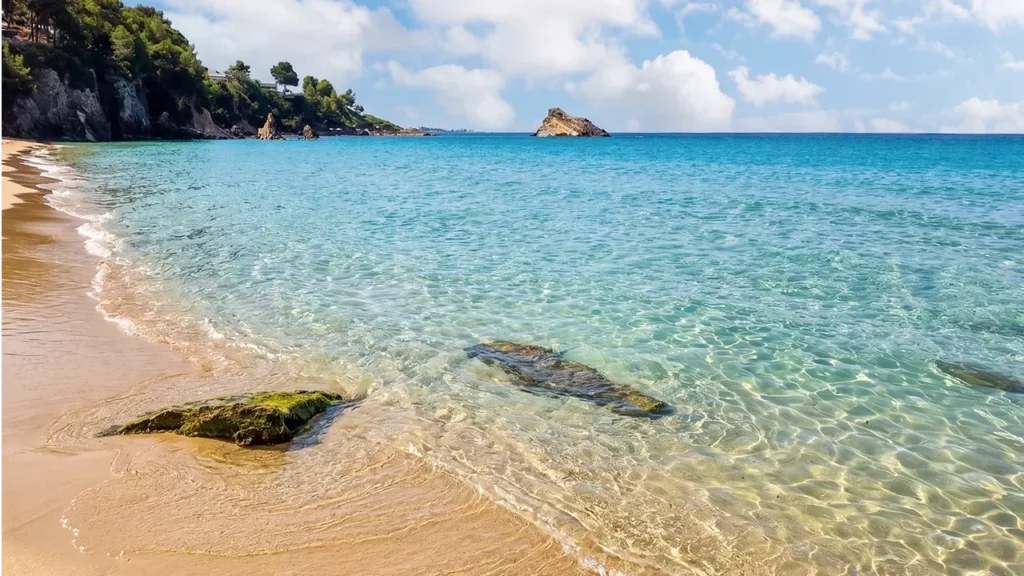
The best beach in Kefalonia is not always the most famous one.
Myrtos may deliver the island’s most recognisable view, but Makris Gialos can produce an easier family day. Antisamos fits naturally into an east-coast itinerary, while Fteri requires a dedicated boat trip or walk. Xi offers a completely different experience from the white-pebble beaches of the north and west.
During our own trip, the main difference between Kefalonia’s beaches was not beauty. It was practicality. Some beaches were easy to include between other stops, while others needed an early start, a specific route or most of the day.
This guide compares the best beaches in Kefalonia by access, parking, surface, water depth, facilities and orientative prices, distance from the main resorts, and the type of traveller each beach suits. Each beach also has a short summary of what visitors say and a Google Maps directions link.
For broader planning, start with our Kefalonia travel guide for first-time visitors.
Best beaches in Kefalonia: the quick answer

Best iconic beach: Myrtos
Best major beach near Sami: Antisamos
Best dramatic beach on Paliki: Petani
Best unusual sand and shallow-water experience: Xi
Best easy beach day from Lassi: Makris Gialos
Best smaller Lassi alternative: Platis Gialos
Best south-coast beach with restaurants nearby: Lourdas
Best resort-style beach: Skala
Best clear-water swim near Fiskardo: Emplisi
Best shaded cove near Fiskardo: Foki
Best remote beach excursion: Fteri
Our honest recommendation: do not build the trip around a single ranked list. Choose one scenic beach, one easy beach near your accommodation and one beach that slots into a sightseeing route.
How to choose the right beach in Kefalonia
Kefalonia’s coastline includes white pebbles, sand, shingle, organised resort beaches and remote coves. A beach that is perfect for photography may be inconvenient for a full family day.
Before driving across the island, check:
- Access: direct road, steep descent, walking trail or boat only.
- Parking: formal parking, roadside space or limited local capacity.
- Surface: sand, fine pebbles, larger pebbles or mixed sand and shingle.
- Facilities: shade, toilets, food and sunbeds can be seasonal.
- Sea conditions: exposed west-coast beaches can feel different from sheltered coves.
- Depth: do not assume every attractive beach has a gradual entry.
- Driving route: combine beaches with nearby towns and attractions.
- Your group: children, limited mobility, snorkellers and photographers need different things.
Facilities, parking arrangements, sunbed and food prices and local transport all change from season to season. Every price and distance below is an orientative guide – treat current signs and on-site conditions as more important than any article or map review.
Best beaches in Kefalonia compared
| Beach | Surface | Best for | Main consideration |
|---|---|---|---|
| Myrtos | White pebbles | Iconic scenery and photography | Exposed setting, winding access and peak-season pressure |
| Antisamos | Pebbles | East-coast day and clear-water swimming | Descending road and seasonal facilities |
| Petani | Pebbles and mixed shoreline | West-coast scenery and sunset atmosphere | Winding road and changing sea conditions |
| Xi | Reddish sand | Families, shallow water and a different landscape | Clay-rich water is less suited to clear-water snorkelling |
| Makris Gialos | Sand | Easy resort day from Lassi | Popular and busy in peak periods |
| Platis Gialos | Sand | Smaller Lassi beach and relaxed swimming | Still popular and seasonal facilities vary |
| Lourdas | Mixed beach surface | Long beach day with food nearby | The wider accommodation area includes steep slopes |
| Skala | Sand and shingle | Resort holidays and long beach walks | Far from the north-west highlights |
| Emplisi | Shingle and rock | Clear water and snorkelling near Fiskardo | Limited conventional organisation |
| Foki | White pebbles | Shade, calm cove atmosphere and snorkelling | Small beach with limited space |
| Fteri | Pebbles | Remote scenery and boat access | No conventional facilities; requires planning |
Myrtos Beach: best for Kefalonia’s iconic view

Myrtos is the beach most people recognise before they arrive in Kefalonia. Its white-pebble arc sits below high cliffs on the north-western coast, with roadside viewpoints above the bay.
The viewpoint and the beach are separate experiences. Even if you do not plan to swim, the elevated view is worth including when you travel between the central part of the island, Assos and the north.
Why visit Myrtos?
- It delivers Kefalonia’s most recognisable coastal landscape.
- It pairs well with Assos and a north-western road day.
- The scale of the cliffs and bay is more impressive than a quick photograph suggests.
- The viewpoints make it worthwhile even when sea conditions do not suit swimming.
Access, parking and swimming
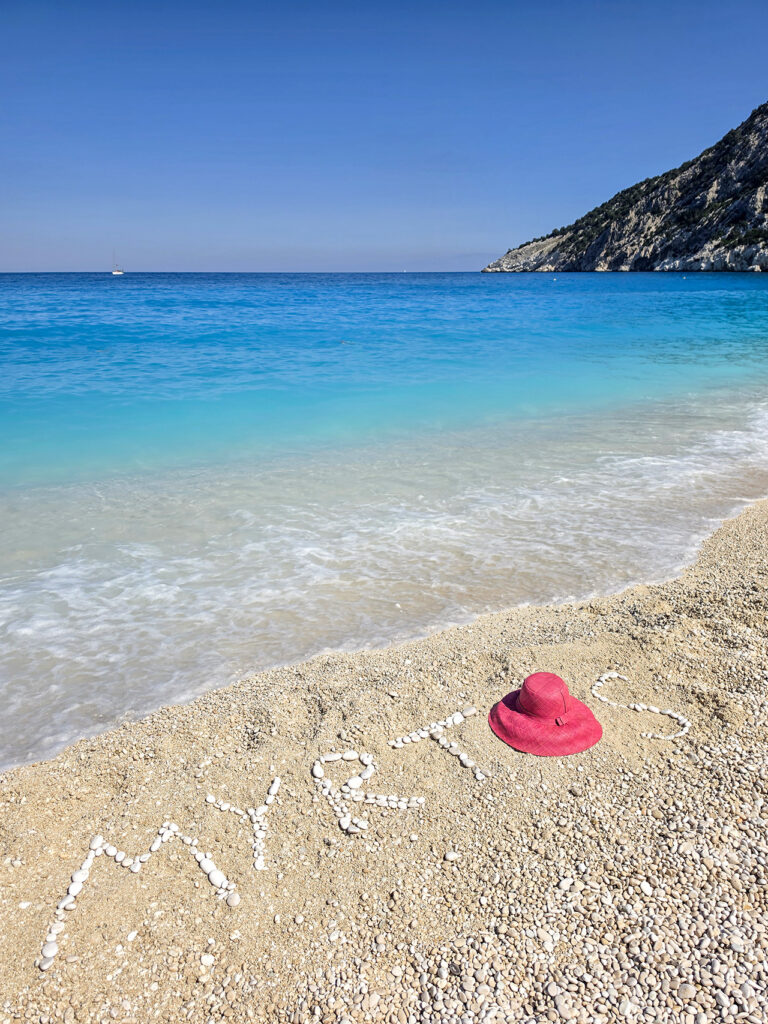
The beach is reached by a descending, winding road and should not be treated as a comfortable walk from the nearest village.
Parking conditions vary with season and demand. In busy periods, arrive earlier and follow local instructions rather than stopping in a way that blocks the road.
Myrtos is exposed to the open Ionian Sea. Water movement, wind and shore break can change, so assess conditions when you arrive.
The white-pebble surface can become hot and may be uncomfortable without suitable footwear. Do not assume seasonal facilities will always be operating; carry water and basic supplies.
Best for: scenery, photography and a memorable first visit.
Think twice if: you need guaranteed calm water, effortless parking or a fully predictable family setup.
Beach facts
Surface: White pebbles with little sand – water shoes help.
Water & depth: A short shallow strip, then it drops off quickly; open, exposed sea that can turn wavy – check the flag before swimming. Not ideal for small children.
Sunbeds & shade: Sunbeds and umbrellas usually in the central section in summer (not guaranteed every year); very little natural shade.
Food & drink: A small snack canteen (cold drinks, simple snacks) – no full taverna, so bring supplies.
Orientative prices: Not reliably confirmed; island sunbed sets tend to run about €10–25 – treat as a guide and check on site.
Parking: Free car park at beach level but limited; fills by mid-morning in July–August, then cars line the narrow approach road.
Best time: Before about 10:00 for parking and calmer water; the cliffs shade the beach early and midday is busiest.
Distance: Approx 29 km / ~45 min from Argostoli; about 20 min from Assos (access from Divarata).
Safety note: In 2026 landslides were reported on the cliff above Myrtos and the authorities placed warning signs – follow all posted signage.
What visitors say: Praised for the iconic white cliffs, vivid sea colour and sunsets; common gripes are the pebbles and quick drop-off, the steep narrow access road, and midday parking and crowds.
Get directions on Google MapsAntisamos Beach: best for an east-coast beach day
Antisamos is one of the easiest major beaches to combine with sightseeing. It lies near Sami and pairs easily with Melissani, Drogarati, Karavomylos or an evening around the port.
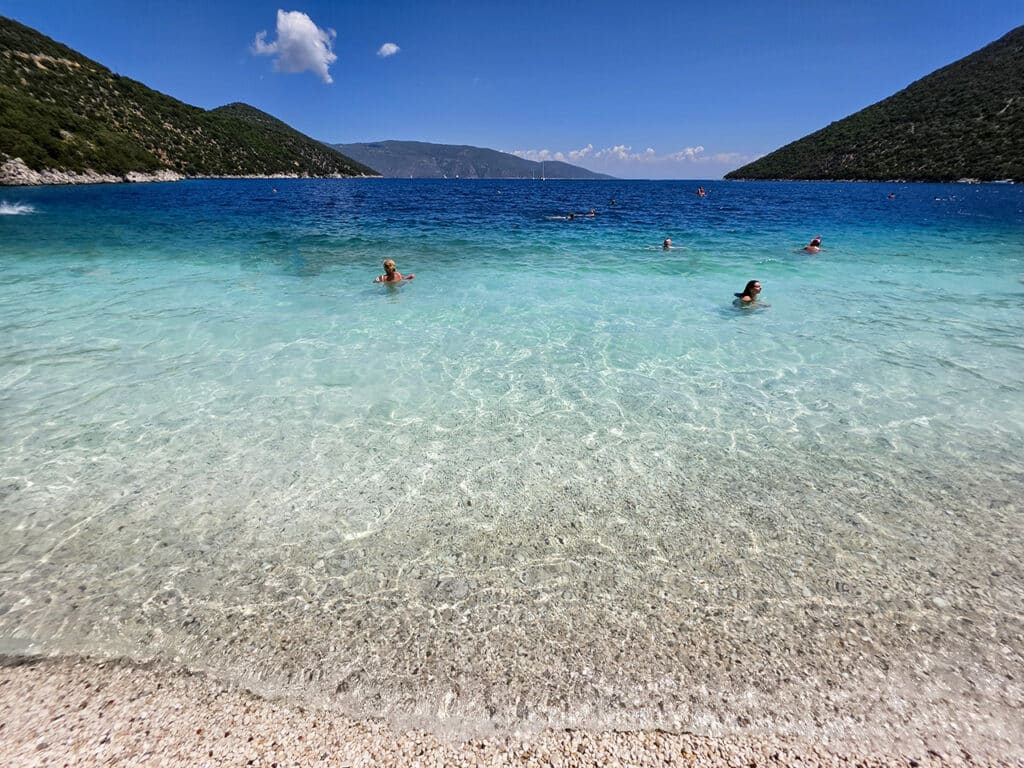
The beach has a pebble shoreline backed by green hills and is reached by a descending road from the Sami side.
Why visit Antisamos?
- It slots into an east-coast itinerary.
- It offers a different setting from the sandy beaches around Lassi and Xi.
- It is close enough to Sami to combine swimming with caves or lunch.
- On-site beach services, where open, can make a full day easier.
Access, parking and swimming
The road descends towards the beach and includes scenic sections. Parking and traffic become more demanding when the beach is busy.
Local transport may operate seasonally, but the current timetable should be checked directly rather than assumed.
The pebble surface makes water shoes useful for some visitors. As at every beach, assess depth, wind and water movement on the day.
Best for: visitors staying in Sami or Agia Efimia and anyone combining a beach with Melissani or Drogarati.
Think twice if: you dislike pebble beaches or want a quiet, undeveloped cove.
Beach facts
Surface: White and grey pebbles (no sand).
Water & depth: A short shallow section, then a steep drop into deep, very clear water; the bay is sheltered so it usually stays calm (Blue Flag). Great for confident swimmers, less so for toddlers.
Sunbeds & shade: Organised – sunbeds, umbrellas, a summer lifeguard and watersports; almost no natural shade.
Food & drink: Beach bars and tavernas on site (such as Acron and a couple of cocktail bars).
Orientative prices: Reports vary from loungers included with a drink up to the island norm of about €10–25 a set – not firmly confirmed; check on the day.
Parking: Free, relatively spacious car park – usually easier than other top beaches.
Best time: Morning for the best loungers; it is large enough rarely to feel packed. Bring sun cover, and watch out for wasps around food.
Distance: Approx 4–5 km / ~10 min from Sami; about 30 km / ~45 min from Argostoli.
What visitors say: Praised for turquoise water, the green mountain backdrop, calm swimming and good facilities; gripes are the pebbles, lack of shade, wasps and peak-season crowds.
Get directions on Google Maps
Petani Beach: best dramatic beach on the Paliki Peninsula
Petani is the Paliki Peninsula’s answer to Kefalonia’s dramatic west-coast scenery. It sits below steep green slopes and is reached by a winding road from the Lixouri side.
Petani deserves its own place in a Paliki day. It should not be added casually after a full north-eastern route simply because the map appears manageable.
Why visit Petani?
- It offers a large-scale western landscape without repeating Myrtos exactly.
- It combines well with Lixouri and other Paliki stops.
- The western orientation can create an attractive late-afternoon atmosphere.
- It rewards visitors who dedicate time to one side of the island.
Access, parking and swimming
The approach is winding and should be driven patiently. Parking becomes more pressured during busy periods, so avoid arriving with a schedule that leaves no flexibility.
Petani is exposed to western weather and sea conditions. Stronger wind and water movement can make the experience different from a sheltered cove.
Best for: scenery, a dedicated Paliki day and visitors comfortable with a winding approach.
Think twice if: you need reliably gentle water for small children or want to combine too many distant attractions.
Beach facts
Surface: Smooth white pebbles mixed with coarse sand and some rocks – water shoes useful.
Water & depth: Deepens quickly; the west-facing bay can pick up waves when it is windy, but the water is clear when calm.
Sunbeds & shade: Organised – sunbeds, umbrellas, lifeguard and showers; limited natural shade.
Food & drink: Two well-regarded tavernas on site (Xouras and Erasmia’s), with service to some sunbeds.
Orientative prices: A sunbed set was reported around €12 (varies by year and position); the tavernas are mid-range – check current prices locally.
Parking: A mix of free and paid areas behind the beach; fills in July–August, then cars use the narrow road (fold your mirrors).
Best time: Morning for parking and calm sea; a west-facing sunset favourite, so many stay into the evening.
Distance: Approx 15 km / ~20–25 min from Lixouri; about 36 km / ~50 min from Argostoli, or the Argostoli–Lixouri ferry then ~15 km.
What visitors say: Praised for sea colour, dramatic cliffs, snorkelling and sunsets; gripes are the rocky underfoot sections, quick drop-off, the twisty access road and cooler, choppier water on windy days.
Get directions on Google MapsXi Beach: best for unusual sand and a different swimming experience
Xi looks different from almost every other major beach in Kefalonia. Its reddish sand and pale clay cliffs contrast with the white pebbles and green hills associated with Myrtos, Antisamos and Petani.
The shallow coastal area can suit visitors who prefer a less dramatic entry than some exposed pebble beaches, but conditions should still be assessed on arrival.
Why visit Xi?

- The landscape is visually distinct.
- The sandy surface appeals to visitors who dislike pebbles.
- It works well with Lixouri and a Paliki itinerary.
- The broader beach area supports a more conventional beach day.
Access, parking and swimming
Xi is reached by road from the Lixouri side. The wider beach area has several access points, so the exact experience depends on where you arrive and which seasonal businesses are open.
The clay-rich sand can make the shallow water look cloudier than the clear pebble coves of northern Kefalonia. Choose Emplisi, Foki or Antisamos instead if transparent water and snorkelling are your main priorities.
Best for: sand, families seeking an easier beach setup and travellers exploring Paliki.
Think twice if: you want the clearest possible water for snorkelling or a wild, undeveloped setting.
Beach facts
Surface: Distinctive reddish, clay-rich sand (fine) – unlike anywhere else on the island.
Water & depth: Gradual and shallow, warm and calm – good for young children; the clay can cloud the shallow water (it looks murky, not dirty), so it is weak for snorkelling.
Sunbeds & shade: Organised – sunbeds and umbrellas fill much of the fairly narrow strip; beach bars and watersports.
Food & drink: Beach bars and eating spots on and near the beach.
Orientative prices: A sunbed set was around €15–20 a pair in 2025–2026 (varies); pedalos about €20 an hour – check on site.
Parking: A parking area by the approach; arrive earlier in peak season (details vary).
Best time: Morning in high season because the strip is narrow; the shallow water stays warm through the day.
Distance: Approx 7 km / ~10 min from Lixouri; about 42 km by road from Argostoli, or much faster via the Argostoli–Lixouri ferry.
Good to know: The grey clay is popular as a natural skin “mud” treatment – a signature part of a Xi visit.
What visitors say: Praised for the red sand and cliffs, shallow child-friendly water and the clay treatment; gripes are the narrow beach crowded with sunbeds, little free space and the cloudy water.
Get directions on Google Maps
Makris Gialos: best easy beach day from Lassi
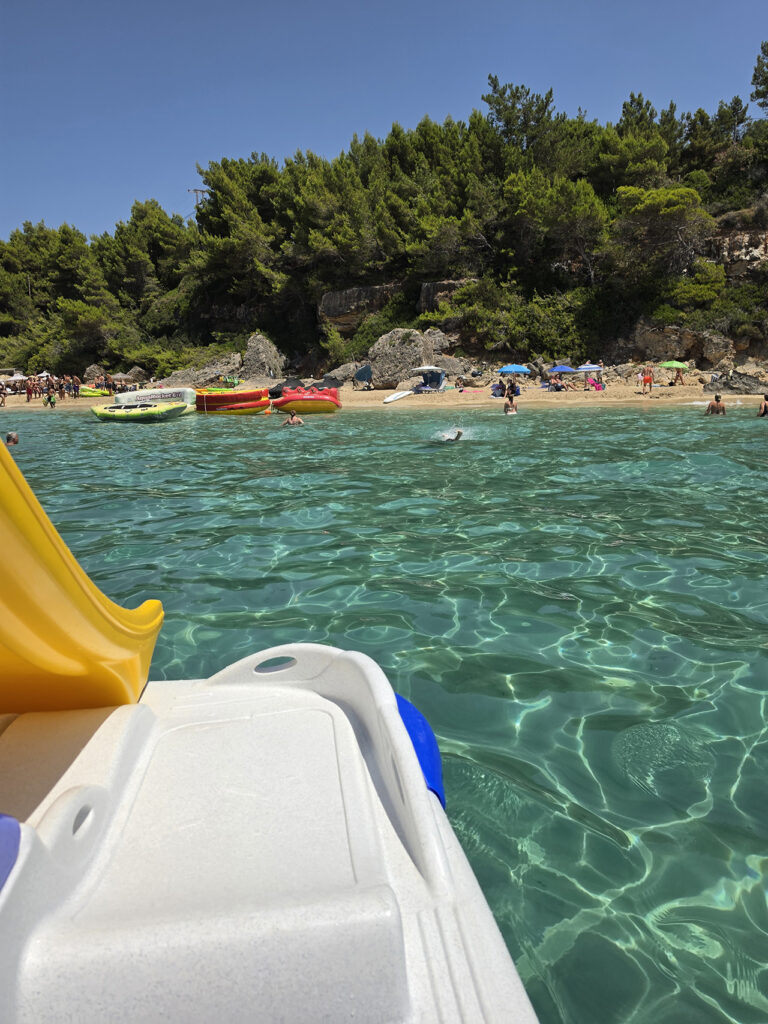
Makris Gialos is one of Kefalonia’s most useful major beaches. It is sandy, close to Lassi accommodation and suited to visitors who want a conventional beach day without crossing the island.
This is not the place to seek isolation. Its strength is convenience.
Why visit Makris Gialos?
- It is easy to include when staying in Lassi or Argostoli.
- The sandy surface is different from many of Kefalonia’s famous pebble beaches.
- Beach services, where operating, suit a longer beach session.
- It works well on arrival day, departure day or between longer driving routes.
Access, parking and swimming
Access is easier than at remote or cliff-backed beaches, but the area can become busy. Check the precise route and parking options near your chosen entrance.
The beach is popular with families, but no beach is automatically safe in every condition. Watch children, check the water and do not rely only on a general family-friendly label.
Best for: Lassi stays, sandy beach days and visitors prioritising convenience.
Think twice if: you want solitude or one of Kefalonia’s dramatic wild landscapes.
Beach facts
Surface: Fine, soft golden sand, backed by pines.
Water & depth: A gentle, gradual slope into shallow, clear water – excellent for families; usually calm (Blue Flag).
Sunbeds & shade: Organised and busy – sunbeds and umbrellas plus a free-access area; watersports centres.
Food & drink: Beach bars and a taverna on site (such as the Costa Costa beach bar).
Orientative prices: Sunbeds vary widely – roughly €8–10 for a single lounger, up to about €30–40 for a double set, and higher again in peak July–August; check position and price on site.
Parking: A car park that fills fast (worst on cruise-ship days), with steps down to the sand; improper parking can be ticketed.
Best time: Early morning; it gets very crowded at midday and on cruise days.
Distance: Approx 3 km / ~10 min from Argostoli; walkable from much of Lassi.
What visitors say: Praised for soft sand, clear shallow water, a family feel and the free-access area; gripes are steep peak-season sunbed prices, crowds, and parking difficulty.
Get directions on Google MapsPlatis Gialos: best smaller alternative in Lassi
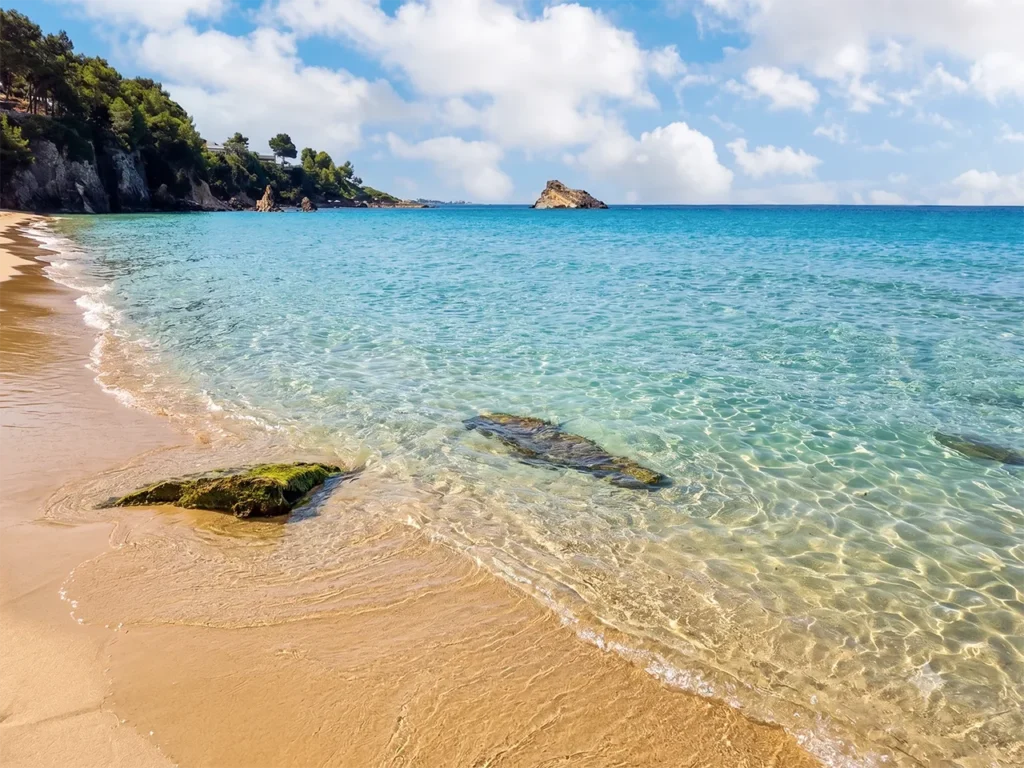
Platis Gialos is the smaller neighbour of Makris Gialos. It shares the everyday advantages of the Lassi area while often feeling more contained.
It is a useful choice when you want sand and straightforward access without dedicating an entire driving day to the beach.
Why visit Platis Gialos?
- It is convenient for Lassi and Argostoli.
- The sandy shoreline suits visitors who prefer it to pebbles.
- Its smaller scale creates a different feel from Makris Gialos.
- It works well as a half-day beach rather than a major island excursion.
Seasonal facilities and demand vary. During busy periods, being smaller can also mean that available space feels limited sooner.
Best for: couples, families and visitors staying around Lassi.
Think twice if: your priority is a dramatic viewpoint or a remote cove.
Beach facts
Surface: Fine, light sand.
Water & depth: Sandy seabed with a shallow, gradual entry – kid-friendly; calm and clear.
Sunbeds & shade: Organised – sunbeds and umbrellas, showers, changing rooms and a volleyball court (Blue Flag).
Food & drink: A small canteen/kiosk (sandwiches, coffee, salad, ice cream).
Orientative prices: About €15–20 for two sunbeds and a parasol recently – often a little cheaper than its neighbours; check on site.
Parking: A small car park at the entrance plus overflow off the main road; aim to arrive by about 9:00.
Best time: Early (by ~9:00) in peak season; a calmer, no-loud-music feel.
Distance: Approx 3.5 km from Argostoli; in Lassi, right next to Makris Gialos.
What visitors say: Praised for clear shallow water for children, tidy facilities and value; gripes are peak crowding, towel-hogging and a strict re-pay sunbed policy.
Get directions on Google MapsLourdas Beach: best for a long south-coast beach day
Lourdas combines a substantial beach area with a developed seafront and places to eat nearby.
The beach itself is easier to understand than the wider accommodation area. Villas and apartments above Lourdas can sit on significant slopes, even when the map distance to the sea looks short.
Why visit Lourdas?
- You can combine swimming with cafés or tavernas along the seafront.
- It works well for a slower full beach day.
- It is useful for travellers staying on the southern coast.
- The longer shoreline gives visitors more choice than a compact cove.
Road access reaches the beach area, but parking conditions depend on season and the section you choose. Do not assume accommodation in Lourdata provides a flat walk to the beach.
The beach surface can vary by section. Bring suitable footwear if you are sensitive to pebbles or shingle.
Best for: relaxed beach days, food nearby and visitors staying around Lourdata or Trapezaki.
Think twice if: you are choosing accommodation above the beach without checking the slope and walking route.
Beach facts
Surface: Mixed sand and shingle, pebbly at the waterline – water shoes help getting in.
Water & depth: Generally shallow, calm and kid-friendly, but afternoon winds often make it choppy – mornings are noticeably calmer.
Sunbeds & shade: Organised – sunbeds and umbrellas; a row of seafront tavernas and cafés.
Food & drink: Several cafés and tavernas right along the shore (reviewers find them reasonably priced).
Orientative prices: Not reliably confirmed; the seafront tavernas are described as affordable – check locally.
Parking: Roadside along the narrow beach road, congested in peak season – arrive early.
Best time: Morning for calmer water and parking; the afternoon wind picks up.
Distance: Approx 16–17 km / ~25 min from Argostoli (about 14 km from the airport), down a steep, winding road from Lourdata village above.
What visitors say: Praised for clear turquoise water, affordable seafront tavernas and a peaceful feel; gripes are the steep narrow access road, afternoon wind and the pebbly seabed.
Get directions on Google MapsSkala Beach: best resort-style beach
Skala is one of the easiest beaches to build an entire resort holiday around. The long sand-and-shingle shoreline sits beside a developed tourist area with accommodation and places to eat.
It is less useful as a quick stop during a north-western sightseeing day because of its position in the south-east.
Why visit Skala?
- The beach is part of the resort rather than a separate excursion.
- The long shoreline supports walks and full beach days.
- It works well for visitors who prefer to stay mostly in one area.
- Local services make the practical side of the day easier.
Visitors staying in Skala can often reach a section of the beach without a dedicated drive. The exact beach surface and facilities vary along the shoreline.
Best for: resort holidays, families and visitors avoiding daily island crossings.
Think twice if: your accommodation is in the north or your main goal is a remote, dramatic beach.
Beach facts
Surface: Mixed sand and shingle and section-dependent – tourism copy says golden sand, but expect pebbles at the waterline; beach shoes help.
Water & depth: Varies along the long beach – some gently shelving family sections, some quicker, steeper drops; can turn choppy with wind or boat wash.
Sunbeds & shade: Organised in the north and centre (loungers, beach bars, service); the southern third is wilder and undeveloped.
Food & drink: Beach bars on the sand and Skala village tavernas a short walk inland.
Orientative prices: Orientative 2025–2026 figures – a sunbed set about €8–15, a beer about €5–6, cocktails about €8–12 (single-source; treat as ballpark).
Parking: Skala is a walkable resort; dedicated car-park detail is not confirmed.
Best time: Mid-May to June and September for warm sea and fewer people; mornings are calmer; dawn or dusk if you hope to see turtles.
Distance: A base in its own right; about 40–42 km / ~50–60 min from Argostoli.
Protected area: The southern section is a loggerhead turtle nesting area (roughly late May–early October) – stay behind marked ropes, do not disturb nests and prefer reef-safe sunscreen.
What visitors say: Praised for clear water, a relaxed, not over-commercialised feel and good-value bar service; gripes are the pebbly, sometimes steeply shelving entry and occasional choppy water.
Get directions on Google Maps
Emplisi Beach: best clear-water swim near Fiskardo
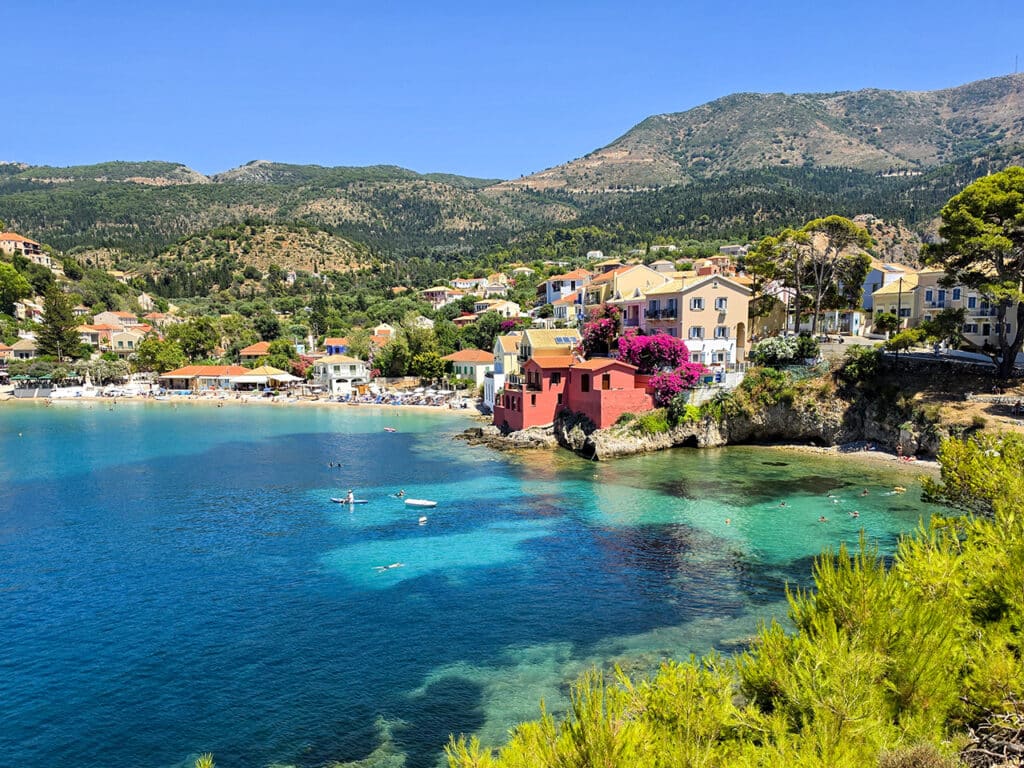
Emplisi is a rewarding northern beach for visitors staying in or visiting Fiskardo. Its shingle shoreline, clear water and rocky edges make it a stronger choice for swimming and snorkelling than for a soft-sand resort day.
- It is close enough to combine with Fiskardo.
- The clear water appeals to swimmers and snorkellers.
- The rocky edges create a different northern-coast experience.
- It is easier to include than a remote boat-only beach.
Emplisi is not a fully organised resort beach. Bring water and the supplies you need, and do not assume sunbeds or food will be available.
Rock and shingle make suitable footwear useful.
Best for: snorkelling, clear water and a Fiskardo day.
Think twice if: you need soft sand, extensive facilities or a large beach.
Beach facts
Surface: Small white and grey pebbles, backed by rock – water shoes recommended.
Water & depth: A small cove that deepens fairly quickly; calm, sheltered and very clear – excellent snorkelling around the rocky sides.
Sunbeds & shade: Essentially unorganised – no sunbeds or umbrellas and no natural shade; bring your own.
Food & drink: A small kiosk/snack van at the top (drinks, ice cream, sandwiches) – no taverna.
Orientative prices: No sunbeds; kiosk prices not confirmed – bring supplies to be safe.
Parking: Asphalt access but a narrow, zig-zag final approach and a small car park that fills fast.
Best time: Morning (by about 10:00) – it is small and fills by midday.
Distance: Approx 2 km / a few minutes from Fiskardo; about 50 km / ~1 hr 15 from Argostoli.
What visitors say: Praised for strikingly clear water, a peaceful feel and excellent snorkelling; gripes are the uncomfortable pebbles, the small size with tight midday parking and the lack of facilities and shade.
Get directions on Google MapsFoki Beach: best small cove near Fiskardo
Foki is a small white-pebble cove surrounded by greenery. Trees provide natural shade in parts of the beach, and the sheltered setting creates a quieter visual contrast with the open west coast.
- It is easy to associate with a Fiskardo stay.
- The trees and cove setting provide a distinct atmosphere.
- Clear water makes it appealing for swimming and snorkelling.
- It suits a shorter northern beach stop.
Foki is small. Parking and beach space can feel limited when demand is high.
Natural shade moves during the day and should not replace bringing appropriate sun protection.
Best for: a compact cove, natural shade and a quieter northern swim.
Think twice if: you want a long sandy beach or guaranteed personal space in peak season.
Beach facts
Surface: Pebbles with flat rock platforms for getting in – water shoes advised.
Water & depth: A sheltered, calm inlet good for swimming and snorkelling; a sea cave sits to one side (a tiring swim – for strong swimmers only).
Sunbeds & shade: No hire sunbeds, but its standout feature is natural shade from an olive grove running down to the beach (wooden benches under the trees).
Food & drink: A small fish taverna (Taverna Foki) just across the road, plus an on-site kiosk.
Orientative prices: Not confirmed – the taverna is busy at lunch, so a reservation helps.
Parking: Limited street-side parking only.
Best time: Flexible thanks to the tree shade (good for hot afternoons and families); morning is still best for quiet and parking.
Distance: Approx 1.4 km from Fiskardo (a ~20-min level walk or ~5-min drive); about 50 km / ~1 hr 15 from Argostoli.
What visitors say: Praised for the natural olive-tree shade, clear water and snorkelling and the quiet setting near Fiskardo; gripes are the sharp pebbles, limited street parking and moored yachts that can cloud the water.
Get directions on Google MapsFteri Beach: best remote beach excursion
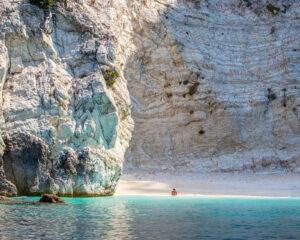
Fteri is not a conventional drive-up beach. It is an unorganised pebble beach on the western side of Kefalonia, generally reached by boat, water taxi or a substantial walk.
This is what makes it appealing, but it also means that Fteri requires more preparation than Myrtos, Antisamos or Makris Gialos.
- It offers a remote coastline experience.
- The boat approach can become part of the day.
- It suits visitors who want a beach without resort infrastructure.
- It fits naturally into a western or Zola-area plan.
Boat and water-taxi arrangements are seasonal and should be checked locally. The walking route is not a casual stroll and requires suitable footwear, fitness, water and sun protection.
There is no conventional beach bar. Bring everything you need and take all waste away.
Do not attempt the walk in extreme heat or without understanding the route.
Best for: remote scenery, a dedicated excursion and confident independent travellers.
Think twice if: you need easy access, facilities, substantial shade or a simple family beach day.
Beach facts
Surface: White pebbles beneath dramatic white cliffs (no sand).
Water & depth: Exceptionally clear turquoise water and great snorkelling; the open bay is exposed, so access is weather-dependent and can be choppy when windy.
Sunbeds & shade: Completely unorganised – no sunbeds, no shade; bring everything.
Food & drink: None on the beach – no bar or taverna; carry all your own water and food.
Orientative prices: No facilities; a water taxi from Zola/Agia Kyriaki is roughly €20–25 per person return (2024–2025, varies and weather-dependent).
Access & parking: Reach it by boat/water taxi (crossing under ~10 min) or by an unpaved, rocky hiking trail from near Zola (roughly 40 min–1 hr down, harder back up); parking at the trailhead.
Best time: Early morning – calmest sea, fewest people and cooler for the exposed hike; June and September are quieter.
Distance: Trailhead/boat at Zola / Agia Kyriaki; about 30 km / ~40–45 min from Argostoli and ~15–20 km / ~30 min from Fiskardo.
Safety note: No facilities and full sun – carry water, shade and proper footwear, take all rubbish away, and avoid the hike in extreme heat or strong wind.
What visitors say: Praised as one of the island’s most beautiful, unspoilt beaches with exceptionally clear water; gripes are the tough, shadeless hike and climb back, the total lack of facilities and boat trips cancelled by wind.
Get directions on Google MapsOther beaches worth considering
Avithos
A sandy option in the Svoronata area, useful for travellers staying near the airport or south of Lassi. Seasonal organisation and local conditions should be checked before building the day around specific facilities.
In summer it usually has sunbeds, umbrellas and a beach bar, with tavernas just behind and free parking nearby (Blue Flag for 2026). The water is mostly shallow and family-friendly, though it can pick up waves when windy and has a few rocky patches at the entry.
Get directions on Google MapsAmmes and Ai Helis
Two sandy, shallow, family-friendly beaches in the Svoronata area near the airport, close to Avithos. Ammes has soft sand, calm clear water, sunbeds, umbrellas, showers and a canteen, with the novelty of watching planes pass low overhead; Ai Helis is a quieter, longer sandy stretch with sunbeds and a beach bar. Both are a short drive south of Argostoli and Lassi and suit an easy family day.
Get directions on Google Maps Get directions on Google MapsKaminia and Mounda
Longer sandy areas near the south-east, often considered by visitors staying around Skala or Katelios. Treat turtle nesting areas and local protection signs with care.
Get directions on Google MapsKatelios
A convenient village-and-beach combination for travellers who prefer a smaller, slower southern base with places to eat nearby.
Get directions on Google MapsVouti and Agia Kyriaki
Western alternatives around the Zola area that can work when Fteri is too complicated or when you want a more conventional road-access beach.
Get directions on Google MapsDafnoudi
A northern cove reached by a walking route. It is better for visitors prepared for access effort than for anyone expecting a drive-up beach.
It is unorganised – no sunbeds, bar or facilities – reached by an easy, mostly shaded walk of roughly 800 m through cypress trees from Antipata; bring water, food and proper footwear. The clear, calm water and a small sea cave make it good for snorkelling, and it is a known shelter for Mediterranean monk seals, so keep your distance from any wildlife.
Get directions on Google Maps
Best Kefalonia beach by travel style
| Travel style | Best starting choices | Why |
|---|---|---|
| First visit | Myrtos, Antisamos and one local beach | Iconic scenery, practical route and a relaxed day |
| Families | Makris Gialos, Platis Gialos, Skala or Xi | Easier beach-day setup, subject to daily conditions |
| Snorkelling | Emplisi, Foki or Antisamos | Clearer water and pebble or rocky settings |
| Soft sand | Makris Gialos, Platis Gialos, Xi or Avithos | Alternatives to the island’s famous pebble beaches |
| Photography | Myrtos, Petani and Xi | Three different landscapes |
| Remote experience | Fteri or Dafnoudi | Access effort reduces the resort feel |
| Near Fiskardo | Emplisi or Foki | Easy to combine with the northern harbour |
| Near Lassi | Makris Gialos or Platis Gialos | Minimal island driving |
| Full resort stay | Skala | Long beach integrated with the resort |
Family-friendly never means risk-free. Water depth, wind, waves, heat and supervision matter more than a permanent label.
How to group Kefalonia beaches by region
North-west day
Combine Myrtos with Assos. Add Fiskardo only if you accept a longer road day and less beach time.
East-coast day
Combine Antisamos with Sami, Melissani and Drogarati. This is one of the island’s most efficient sightseeing-and-swimming combinations.
Paliki day
Choose Petani or Xi as the main beach and add Lixouri. Trying to give both beaches a full visit can make the day feel rushed.
Lassi day
Use Makris Gialos or Platis Gialos for an easier day near your accommodation, then spend the evening in Argostoli.
Northern Fiskardo day
Combine Fiskardo with Emplisi or Foki. Choose one main swim rather than moving between every small cove.
South-coast day
Choose Lourdas, Skala, Avithos or another beach that matches your accommodation area. The southern coast is too broad to treat as one quick route.
For help choosing the right base, read our guide to where to stay in Kefalonia.
Parking and access: what to expect
- Arrive earlier at Myrtos, Petani and other famous west-coast locations during busy periods.
- Do not assume an organised beach guarantees a large formal car park.
- Never block a narrow road, private entrance, bus route or emergency access.
- Check the final access road before taking a large vehicle towards a small cove.
- At remote beaches, distinguish between parking for the trail and access to the beach itself.
- Follow local signs even when parked cars appear to suggest a different rule.
- Keep an alternative beach in the same region in case access or parking is difficult.
Google Maps can help locate an access point, but it does not confirm that parking is legal, free or available.
On accessibility: the organised sandy beaches near Argostoli and Lassi (such as Makris Gialos, Platis Gialos, Avithos and Ammes) are the easiest for anyone with limited mobility, while many famous beaches – Myrtos, Fteri, Dafnoudi and the northern coves – involve steps, steep roads or walking trails.
Sea conditions and beach safety
Kefalonia’s beaches do not behave identically.
Open west-coast beaches can be more exposed, while smaller coves may feel calmer. Conditions can still change quickly with wind and weather.
- Check the sea before entering rather than relying on yesterday’s photographs.
- Do not assume clear water means shallow water.
- Watch children continuously.
- Use suitable footwear on hot pebbles, sharp rock and walking trails.
- Do not swim beyond your ability because a beach is famous.
- Respect flags, lifeguard instructions and local warnings where present.
- Keep a sheltered alternative for windy days.
- Avoid cliff edges and unstable slopes when taking photographs.
Seasonal lifeguard or facility coverage should never be assumed. Check current local information.
What to bring for a Kefalonia beach day
- water and food, especially for remote or unorganised beaches;
- sun protection and personal shade;
- water shoes if pebble beaches are uncomfortable for you;
- a snorkel for clear-water coves;
- a dry bag or waterproof pouch;
- offline maps for remote access routes;
- sensible shoes for Fteri, Dafnoudi or any walking approach;
- a small first-aid kit;
- a bag for taking your rubbish away.
Do not leave valuables visible in the car, and do not leave rubbish on beaches without facilities.
Common mistakes when planning Kefalonia beaches
Ranking beaches only by photographs
A spectacular beach can still be the wrong choice for your children, mobility, schedule or preferred swimming surface.
Planning Myrtos, Petani and Antisamos in one day
They are in different regions. Reaching all three is not the same as enjoying them.
Assuming every famous beach is sandy
Many of Kefalonia’s best-known beaches are pebble or shingle beaches. Bring appropriate footwear if that affects your comfort.
Depending on permanent facilities
Sunbeds, food, toilets, buses and lifeguard coverage can be seasonal or change from year to year.
Arriving at remote beaches without supplies
Fteri and similar coves require preparation. Bring water, shade and suitable footwear.
Ignoring wind and water movement
A beautiful west-coast beach may not be the best swimming choice on a particular day.
Choosing accommodation from the beach name alone
A property listed in Lourdata, Lassi or Skala may still be farther from usable beach access than expected. Check the exact map pin and walking route.
Frequently asked questions
What is the best beach in Kefalonia?
Myrtos is the most iconic, but the best beach depends on your priorities. Antisamos is practical for an east-coast day, Makris Gialos is easier from Lassi, Xi offers sand and a different landscape, and Fteri suits visitors seeking a remote excursion.
Which beaches in Kefalonia are sandy?
Makris Gialos, Platis Gialos, Xi, Avithos, Ammes and Ai Helis are among the better-known sandy choices. Skala and several southern beaches have mixed sand-and-shingle sections.
Which beaches are best for families?
Makris Gialos, Platis Gialos, Skala and Xi are sensible starting choices because of their beach setup or surface. Conditions, depth and supervision still need to be assessed on the day.
Is Myrtos Beach suitable for children?
Families visit Myrtos, but it is an exposed pebble beach and water conditions can change. It should not be treated as automatically suitable for every child or every day.
Which beach is best near Lassi?
Makris Gialos is the main practical choice, while Platis Gialos offers a smaller alternative nearby.
Which beach is best near Sami?
Antisamos is the major beach choice near Sami and works naturally with Melissani, Drogarati and the east coast.
Which beaches are near Fiskardo?
Emplisi and Foki are two of the best-known nearby choices. Both suit swimming and clear-water cove experiences more than a sandy resort day.
How do you reach Fteri Beach?
Fteri is generally reached by boat or water taxi, or by a substantial walking route. Services and route conditions should be checked locally before visiting.
Do Kefalonia beaches have parking?
Many road-access beaches have parking or informal parking areas, but capacity and legality vary. Popular beaches can become difficult during peak periods, and local signs always take priority.
Do I need water shoes in Kefalonia?
They are useful if you find pebbles uncomfortable or plan to swim around rocky coves. They are less important on sandy beaches such as Makris Gialos, Platis Gialos and Xi.

Final verdict
Kefalonia does not have one beach that is best for every visitor.
Choose Myrtos for the island’s iconic landscape.
Choose Antisamos for an efficient east-coast beach and sightseeing day.
Choose Petani for Paliki scenery, or Xi for sand and a completely different coastline.
Choose Makris Gialos, Platis Gialos, Lourdas or Skala when convenience matters more than remoteness.
Choose Emplisi or Foki near Fiskardo, and treat Fteri as a planned excursion rather than an extra stop.
The strongest Kefalonia beach plan includes variety: one famous landscape, one practical local beach and one beach that fits naturally into the region you are already exploring.