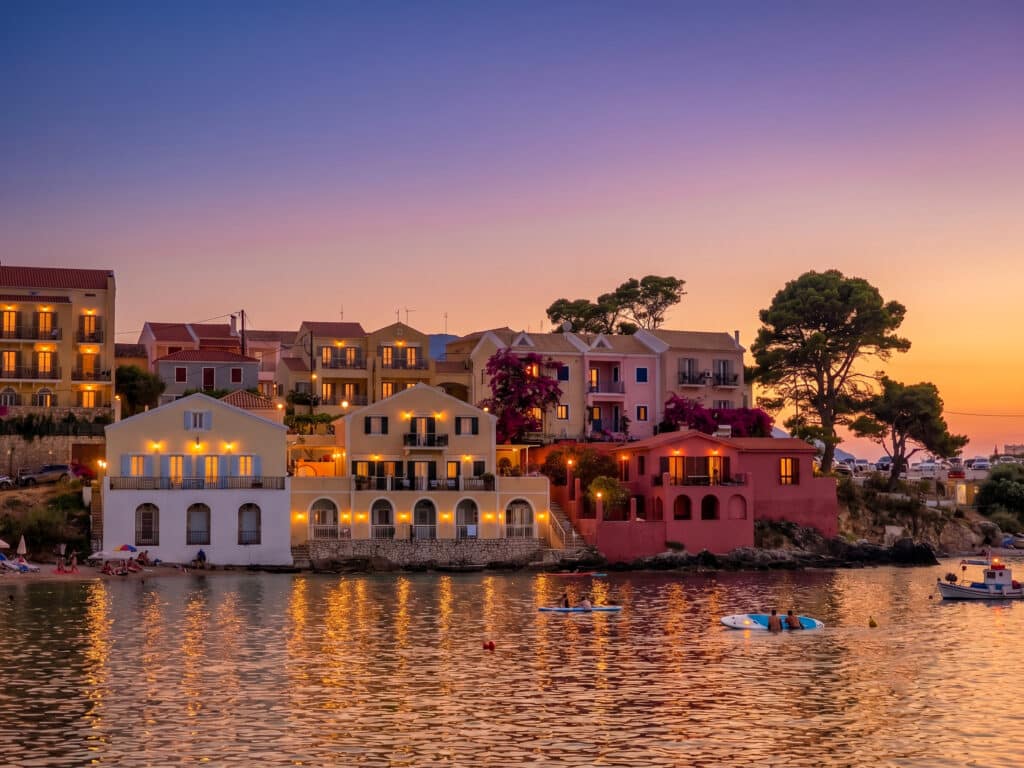
🏝️ Kefalonia Guide 2026: The largest of the Ionian Islands — spectacular beaches (Myrtos!), underground caves, Venetian harbours and excellent food. Reached by seasonal flights or a connection through Athens, and by ferry from the mainland. Authentic, uncrowded and well suited to every age.
📋 Kefalonia at a glance:
| Size | ~770 km², around 35,000 residents |
| Getting there | Ferry from Kyllini/Patras → Poros/Sami. Flights via Athens plus seasonal charters |
| Top beaches | Myrtos, Antisamos, Petani, Xi, Makris Gialos |
| Must see | Melissani Cave, Drogarati, Assos Castle, Fiskardo |
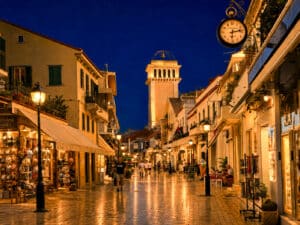
| Capital | Argostoli (promenade, tavernas, shops) |
| Best season | ⭐ June + September (quieter, better value). July–Aug = peak |
| Summer climate | ~28°C air, 25–26°C sea |
| Atmosphere | Relaxed, authentic, uncrowded |
Getting to Kefalonia
| ✈️ By air | Kefalonia Airport sits about 8 km (~10 min) from Argostoli. Seasonal charter flights operate in summer, with year-round connections via Athens |
| ⛴️ By ferry | From Kyllini or Patras on the mainland → the ports of Poros / Sami. Frequent crossings in summer |
| 🚗 Getting around | A car is recommended — local buses are limited. See Do You Need a Car in Kefalonia? and the Kefalonia road trip map |
How many days do you need in Kefalonia?
Kefalonia is a big island and its highlights are spread across different regions, so the length of your stay changes what you can realistically enjoy without spending the holiday in the car.
| 3–4 days | One region — for example the centre plus the north: Myrtos, Assos and Fiskardo |
| 5–7 days | The classic mix: northern villages, the Melissani and Drogarati caves near Sami, and a couple of beach days |
| 7+ days | Add the Paliki peninsula (Lixouri, Petani, Xi) and the quieter south (Skala, Katelios) |
For a full day-by-day plan, see our 7 days in Kefalonia itinerary. Distances look short on the map but the mountain roads are slower than they seem, so check the road trip map before planning each day.
Kefalonia's beaches
| Beach | Type | Why it is worth it |
|---|---|---|
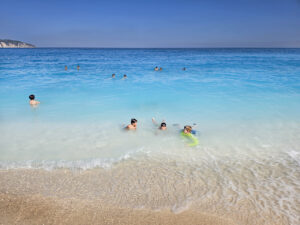
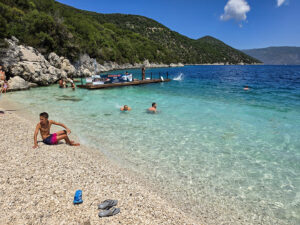
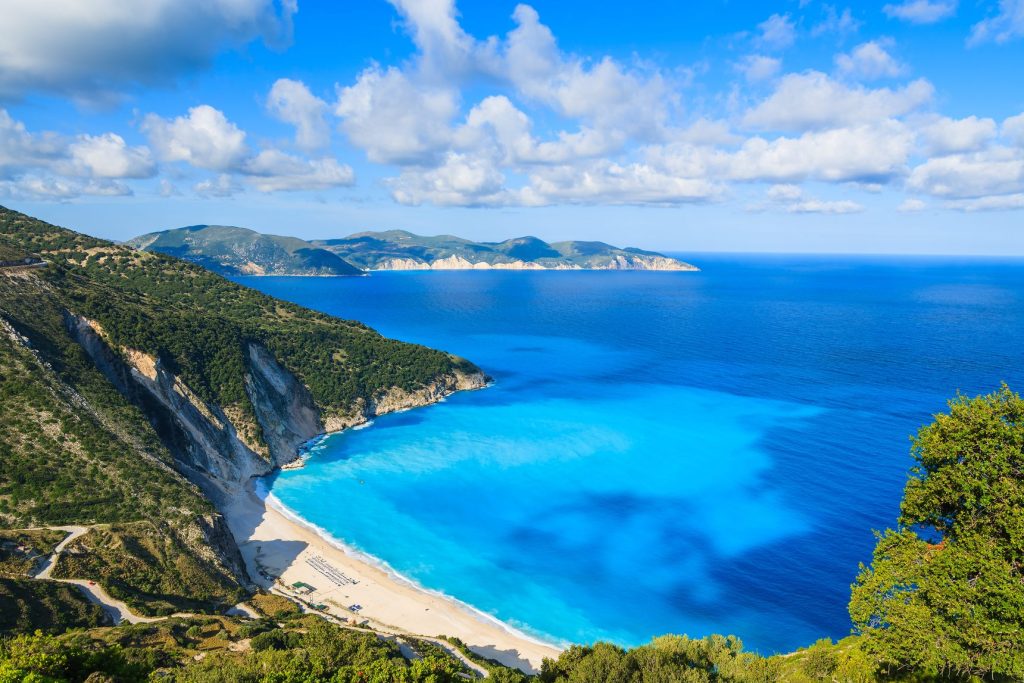
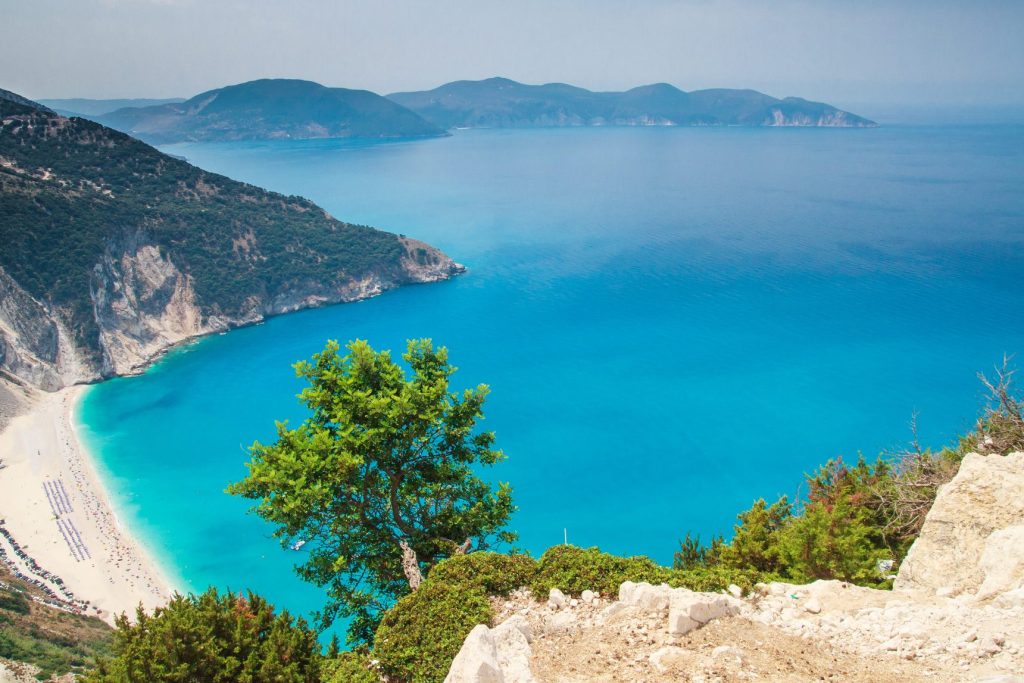
| ⭐ Myrtos | White pebbles | The island’s star and one of Greece’s most famous beaches. Winding road, viewpoint above. Note: waves and deep water. See our Myrtos guide |
| Antisamos | Pebbles | A filming location for “Captain Corelli’s Mandolin”. Emerald water, green hills |
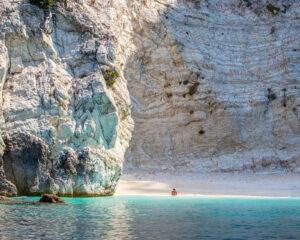
| Petani | Pebbles | Often compared with Myrtos — big cliffs and a wilder feel |
| Makris Gialos | Fine sand | Near Argostoli, gentle entry, good for families, pines and tavernas |
| Lourdas | Sand | Long beach, mountain backdrop, relaxed, tavernas on the shore |
| Xi | Reddish sand! | Unusual red-orange sand and natural clay. Calm, shallow water, ideal for families |
| Skala | Sand + pebbles | Long beach, full facilities, water sports |
For the full list and practical tips, read our best beaches in Kefalonia guide.
Before you head to the beach
- Many of the best beaches (Myrtos, Antisamos, Petani) are pebble or shingle — water shoes make getting in and out much easier.
- At Myrtos the seabed drops away quickly and there can be waves; take care with weaker swimmers and young children.
- Shade is limited on some beaches. A few have sunbed and umbrella hire; wilder ones like Petani have little or nothing, so bring water and your own shade.
- Facilities vary: Makris Gialos, Skala and Lourdas have tavernas and loungers, while remote beaches often have none.
Where to base yourself in Kefalonia
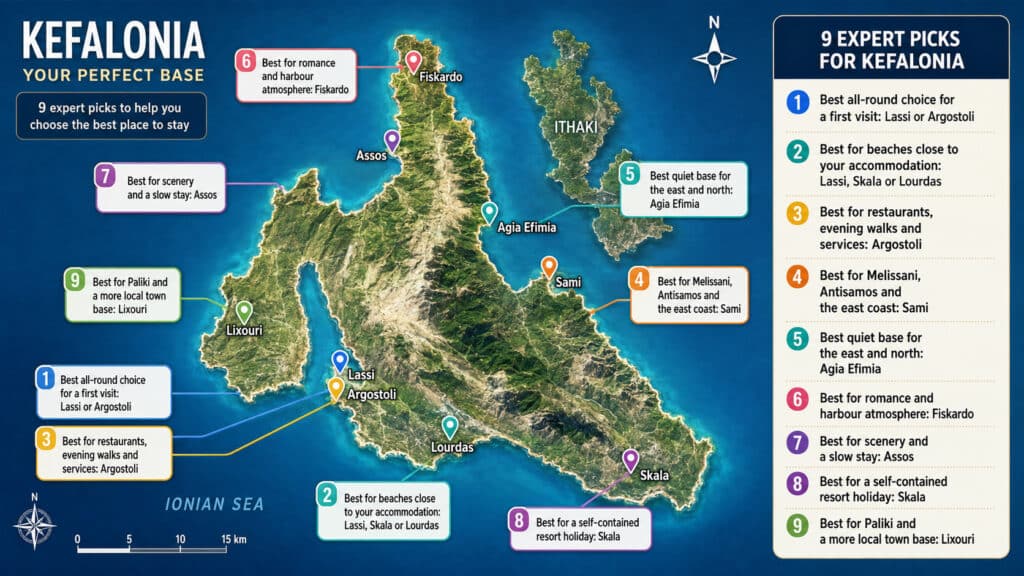
💑 Young travellers, couples, groups:
- Argostoli — the capital: bars, promenade, a natural base for exploring
- Lassi — next to Argostoli, close to Makris Gialos and Platis Gialos beaches
- Skala — long beach, beach bars, boat trips
- Fiskardo — romantic harbour, Venetian architecture, smart restaurants
- Sami — east-coast port, near Antisamos, Melissani and Drogarati
👨👩👧👦 Families and older travellers:
- Lourdas — long beach, calm water, mountain views, quiet
- Agia Efimia — fishing village with an authentic feel
- Poros — long beach, ferry access, day trips
- Svoronata — villas and apartments, quiet beaches (Avithos, Ammes)
- Katelios — fishing village, sandy beach, loggerhead (caretta caretta) turtles nest nearby
Not sure which area suits you? Compare them in our where to stay in Kefalonia guide.
What to do in Kefalonia — sights and activities
| Sight | Details |
|---|---|
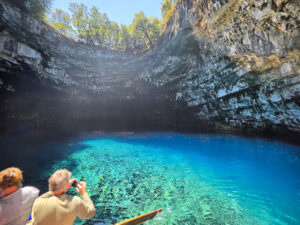
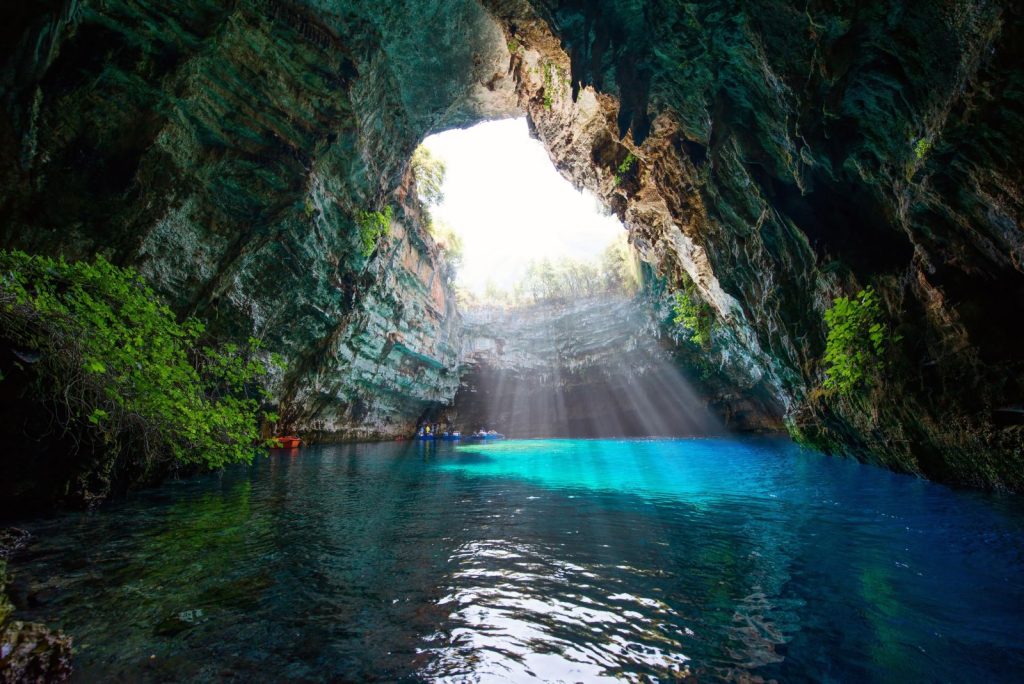
| ⭐ Melissani Cave and lake | A collapsed roof lets light colour the water turquoise; toured by small boat. Very photogenic. See our Melissani guide |
| Drogarati Cave | Stalactites and stalagmites; the “Royal Hall” has concert-quality acoustics. Around €5 entry (check on arrival) |
| Agios Georgios Castle | Venetian fortress near Peratata, with panoramic views over Argostoli |
| Kipouria Monastery | Perched on a cliff edge, sea views and spectacular sunsets |
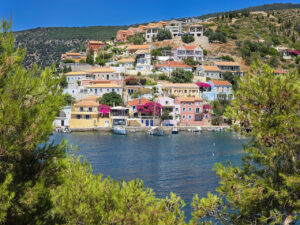
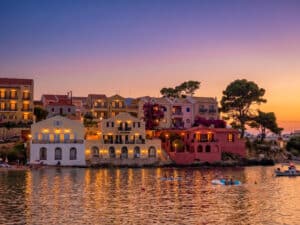
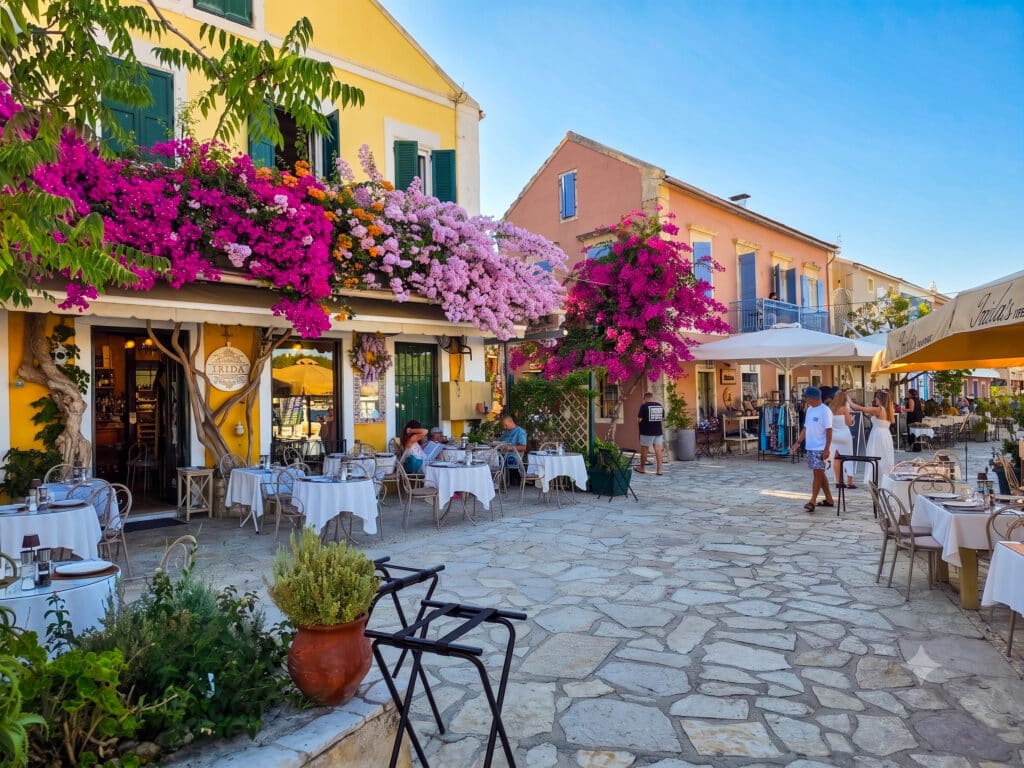
| Fiskardo | Picturesque northern harbour, colourful Venetian houses, waterfront restaurants. See our Fiskardo guide |
| Mount Ainos (National Park) | Marked trails, endemic fir forest, semi-wild horses, viewpoints towards the sea |
| Gerogombos Lighthouse | Near Lixouri, ideal at sunset |
| Boat trips | Secluded beaches and nearby islets. In season: music and wine festivals |
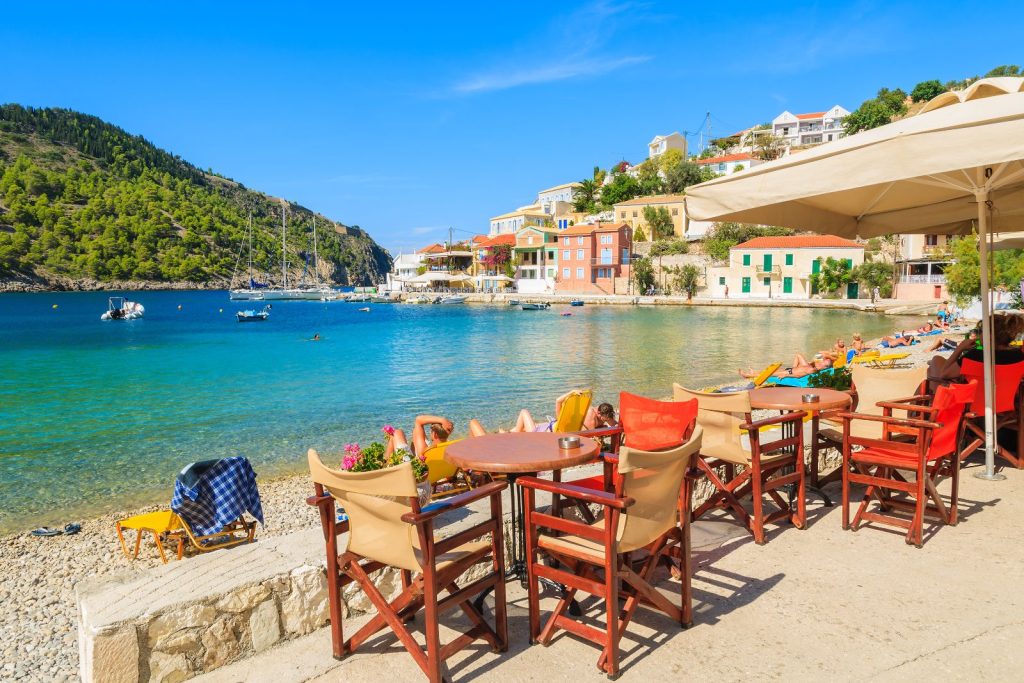
The classic castle-and-harbour village of Assos is also well worth a half-day.
Robola wine and local flavours
Kefalonia’s signature wine is Robola — a crisp, dry white (a protected regional wine) made from the indigenous Robola grape grown on the rocky, high slopes around Mount Ainos. Several wineries near the Omala valley offer tastings.
Look out too for local thyme honey, olive oil, feta and the island’s famous meat and cheese pies (pites). Buying directly from small village producers is part of the experience.
Wildlife: turtles and Mount Ainos
Loggerhead sea turtles (caretta caretta) are often seen in the early morning around Argostoli harbour, near the fishing boats, and they nest on the southern beaches around Skala and Katelios.
Mount Ainos National Park protects a forest of the endemic Kefalonian fir and is home to a small herd of semi-wild horses. Please keep your distance from turtles and nesting beaches — never touch or feed the animals.
What does Kefalonia cost?
Kefalonia is an affordable island with options for every budget. Prices are higher in July and August, while May–June and September usually bring the best value. Local tavernas away from the main tourist centres are good value, and entry fees for the main sights are moderate (around €5). Hiring a car is worthwhile if you want to explore the whole island — see our Kefalonia travel guide for first-timers.
Food and drink
The cooking is Mediterranean, built on fresh local ingredients. Worth trying: pies (pites) filled with meat, cheese or vegetables — a real island staple; shrimp saganaki (prawns in a tomato sauce with feta); souvlaki; moussaka; and feta in every form. Expect plenty of olive oil, oregano and basil, alongside local Robola wine, honey and olives. The food is one of the highlights of a Kefalonia holiday.
Best time to visit — month by month
| Month | Daytime | Sea | What to expect |
|---|---|---|---|
| May | ~23°C | ~19°C | Green landscape, quiet, sea still fresh |
| June | ~27°C | ~22°C | Warm, long days, good value |
| July | ~30°C | ~25°C | Hot, busy and lively |
| August | ~31°C | ~26°C | Hottest and busiest — book ahead |
| September | ~27°C | ~25°C | Warm sea, quieter — a favourite month |
| October | ~24°C | ~23°C | Mild, low season, some places wind down |
Temperatures are typical averages and vary year to year.
Recommended places to stay — by type of trip
👨👩👧👦 Families with children:
- Lassi — excellent beaches for children, hotels with facilities
- Lourdas — quiet, long beach, gentle pace
- Svoronata — villas with kitchens, calm beaches
💑 Couples:
- Fiskardo — romantic, boutique, smart restaurants
- Skala — beach plus lively evenings
- Agia Efimia — fishing village, peaceful
🎯 Active holiday:
- Argostoli — a base for exploring, good links
- Sami — Melissani, Drogarati and Antisamos
- Lixouri — Xi and Megas Lakkos beaches, the western peninsula
Good to know — practical tips
- 💶 Money: the currency is the euro. Cards are widely accepted, but carry some cash for small tavernas, beach kantinas and rural spots.
- 🗣️ Language: Greek is the local language; English is widely spoken in tourist areas.
- 🚗 Driving: a hire car is the most practical way to explore. Roads are paved but winding, so allow more time than the map suggests.
- 🕑 Afternoons: many smaller shops and tavernas close in the afternoon and reopen in the evening.
- 👟 Pack: water shoes for pebble beaches, and strong sun protection — the summer sun is fierce.
- 🐢 Wildlife: give turtles and nesting beaches plenty of space; never touch or feed them.
Frequently asked questions
❓ Kefalonia or Zakynthos?
Kefalonia is larger, more varied and less crowded, with mountain scenery. Zakynthos has Navagio (Shipwreck) Beach and turtles, and feels more touristy. Kefalonia offers more varied beaches, caves and Venetian villages. The two are close together, so you can visit both.
❓ How many days do you need?
Five to seven days covers the main highlights comfortably — the northern villages, the caves near Sami and a few beach days. With three or four days, focus on one region. See our 7-day itinerary.
❓ Do you need a car?
Yes, it is strongly recommended. The island is large (around 770 km²) and the attractions are spread out. With a car you can reach hidden coves, villages and viewpoints. Local buses are limited and infrequent. More detail in Do You Need a Car in Kefalonia?
❓ Is Kefalonia good for families?
Yes. There are sandy, gently shelving beaches such as Makris Gialos, Xi and Lourdas, and calm resort bases like Lassi, Lourdas and Svoronata. Just take care at pebbly, deep-water beaches like Myrtos.
❓ Which is the most beautiful beach?
Myrtos features in world rankings — but it has pebbles, deep water and waves, so it is not ideal for young children. For families, try Makris Gialos (sand, gentle entry) or Xi (reddish sand, calm water). Compare them in our best beaches guide.
❓ Why does much of the island look modern?
A major earthquake in August 1953 destroyed most of Kefalonia’s buildings, so much of the island was rebuilt afterwards. Fiskardo, in the north, was largely spared, which is why it keeps its older Venetian-style architecture.
❓ How do I get there?
By air to Kefalonia Airport (seasonal charter flights, or year-round via Athens), or by ferry from Kyllini or Patras on the mainland to Poros/Sami. Once on the island, a car is the easiest way to get around — see the Kefalonia road trip map.
❓ When is the best time to go?
June and September are ideal (good value, quieter, warm sea around 25°C). July and August are peak season and lively. May and October are possible but cooler.
📌 More Kefalonia guides:
🏝️ Kefalonia — authentic, spectacular, uncrowded.
The best places to stay fill up from spring. Check availability now.