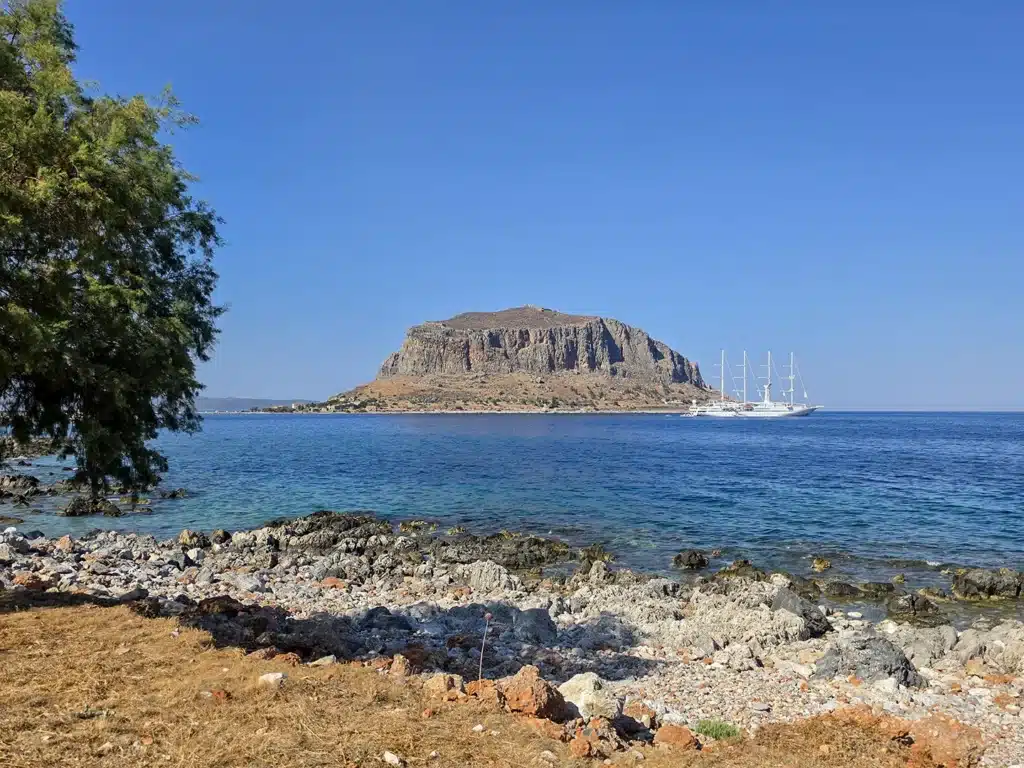
Monemvasia is a walled Castle Town on a rock off the south-eastern coast of the Peloponnese, still lived in after roughly fifteen centuries. Beyond its single landward approach lies a car-free tangle of stone lanes, churches and sea walls — the Lower Town — with a ruined Upper Town and the church of Agia Sophia on the summit above. A day trip shows you the streets; an overnight stay shows you the place. Because no cars go inside, a little planning pays off.
Monemvasia at a glance
- Best for: couples, history, architecture and short road trips
- Minimum time: one full day
- Recommended stay: two nights
- Best base for atmosphere: inside the Castle Town
- Best base for easier logistics: Gefyra
- Car access inside the walls: no
- Upper Town difficulty: steep, exposed and optional
- Best seasons for sightseeing: spring and autumn
Understanding Monemvasia: Gefyra, Lower Town and Upper Town
These names are not interchangeable, and getting them straight makes planning far easier.
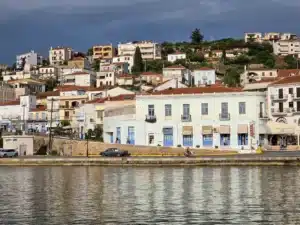
Gefyra is the modern settlement on the mainland, where most of the parking, larger hotels and shops are. It is connected to the rock by a short causeway.
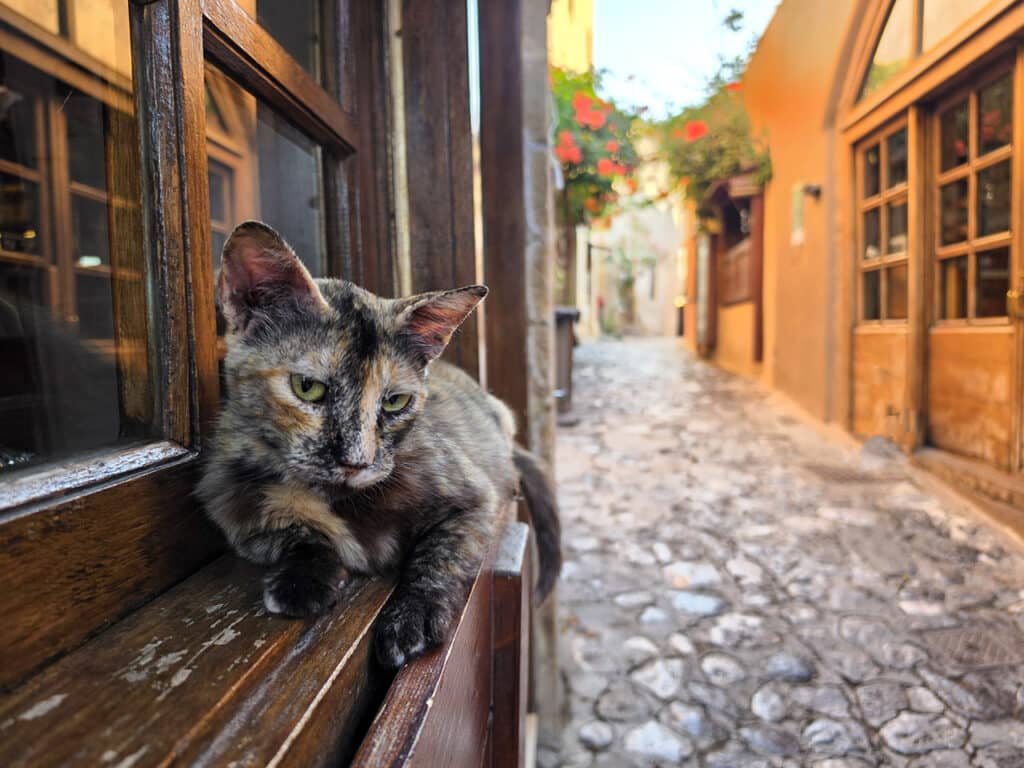
The Lower Town is the inhabited part inside the castle walls: guesthouses, restaurants, cafés, shops and homes threaded through narrow cobbled lanes, alongside Byzantine and post-Byzantine churches. Its main street is traditionally known as the Agora.
The Upper Town sits on the plateau above, reached by a steep path. It is uninhabited — ruins, fortifications, exposed viewpoints and the church of Agia Sophia. The name Monemvasia is usually linked to the Greek for “single entrance”, referring to the rock’s restricted landward access from the mainland.
The best things to do in Monemvasia
Approach the rock and enter through the main gate
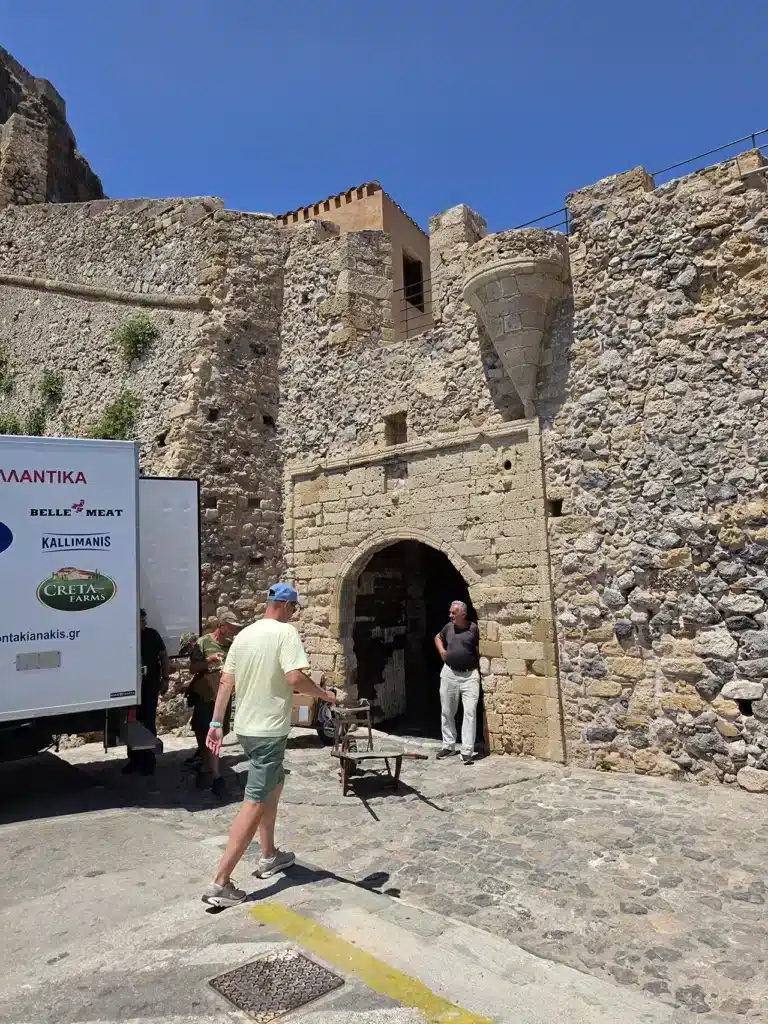
The approach begins in Gefyra, crosses the bridge onto the rock and continues along the road towards the main western entrance. How much of it you walk depends on where you find parking. In hot weather or with luggage, the approach can feel longer than it appears, so use the local minibus or shuttle when it is operating.
Once you pass through the gate, the town changes character: cars stop at the walls, the lane bends, and the Lower Town stays hidden until you are inside.
Walk the Agora and explore the Lower Town
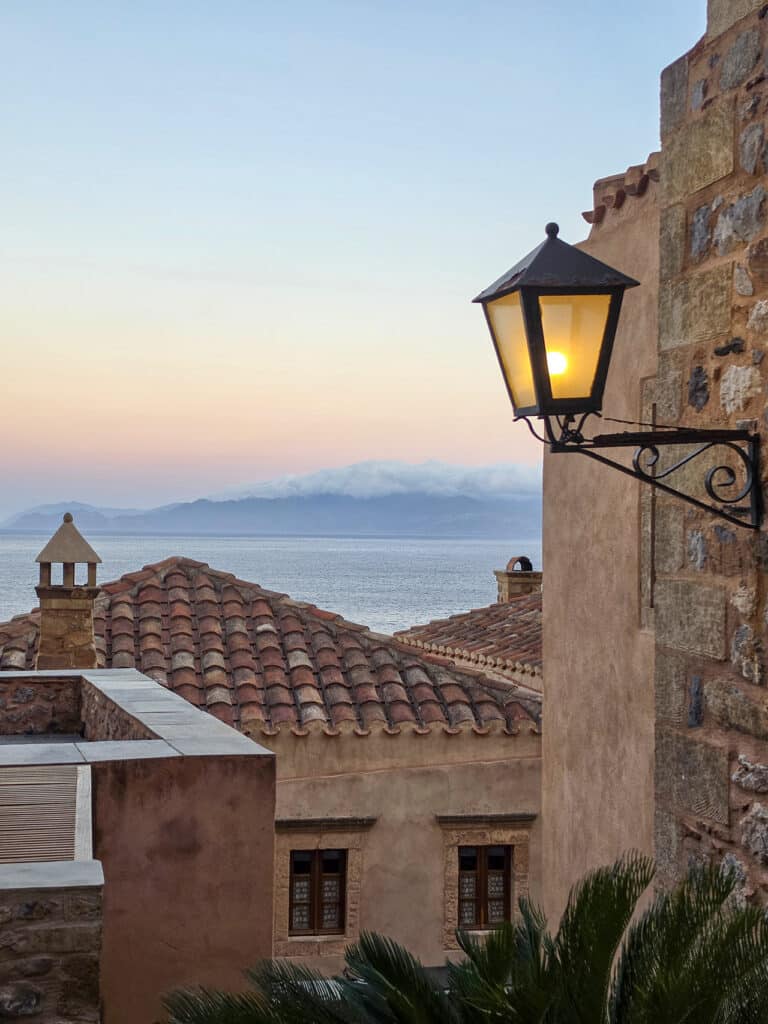
The Agora, the main cobbled street, runs the length of the Lower Town and links most of what you will want to see. Off it, vaulted passages and stepped lanes lead to small squares, shops and quiet corners.
The best approach is to wander rather than follow a fixed route. Among the lanes you will pass several of the around two dozen surviving churches, including Panagia Myrtidiotissa; not all are open, but the density of them tells you how important the town once was.
Visit the main square and Elkomenos Christos
The Lower Town opens out at its central square, the natural heart of the settlement. The church of Elkomenos Christos stands here and remains one of the town’s most significant, a good place to pause between the lanes and the sea walls.
Visit the Archaeological Collection
Housed in a building that served as an Ottoman mosque in the 16th century, the Archaeological Collection of Monemvasia gathers material tied to the town’s history and identity. It is compact and helps make sense of what you see outside. Opening arrangements can change, so check the current information before you plan your visit around it.
Visit the Yiannis Ritsos Museum
The museum operates in the former family home of Yiannis Ritsos, one of Greece’s major 20th-century poets, who was born in Monemvasia and remained closely associated with it. The setting inside the Lower Town makes the visit personal rather than grand. For current opening times and admission, see the museum’s official information.
Walk to Panagia Chrysafitissa and the sea walls
Towards the seaward edge, the square around Panagia Chrysafitissa is one of the most open and photogenic spots in the Lower Town, with the church, whitewashed walls and the water just beyond.
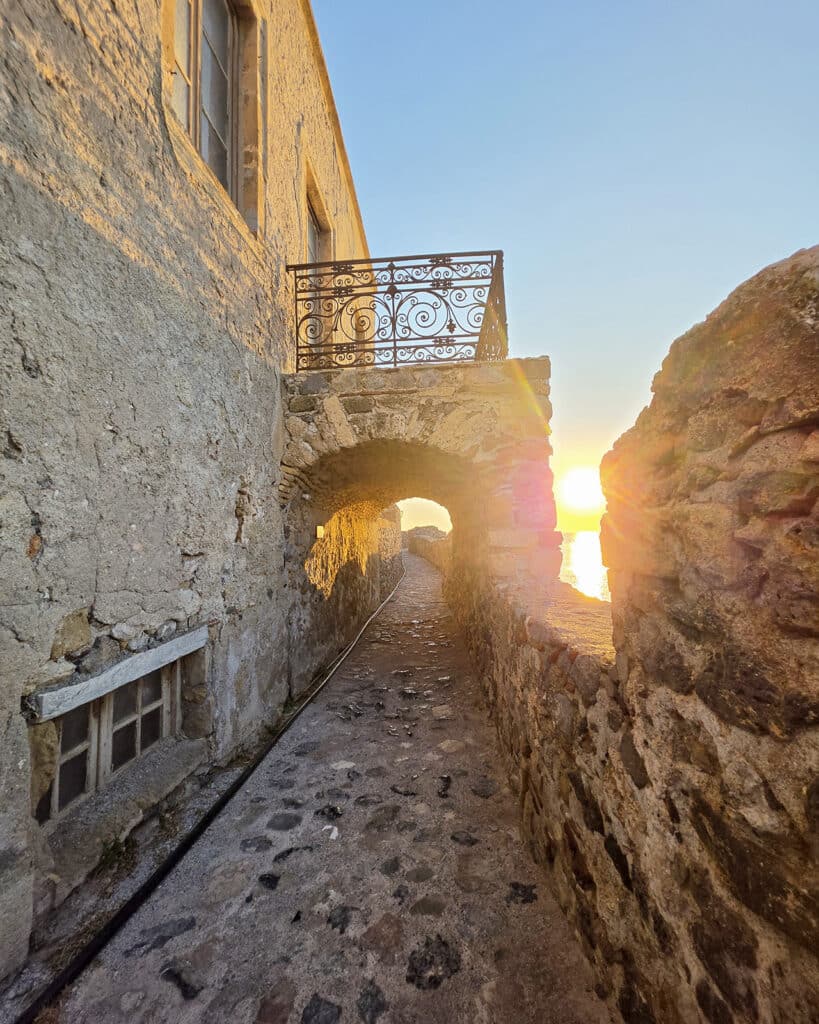
From here you can follow the sea walls, which give the clearest sense of how the town sits between rock and sea.
Find Portello and explore the sea walls
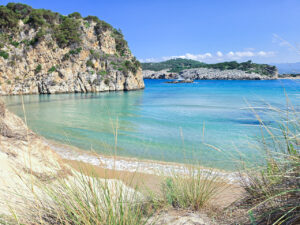
Portello is a small, historic opening in the sea wall, used for moving goods rather than as a beach. When the sea and weather allow, people swim from the rocks here, alongside the sea walls that trace the seaward edge of the town.
This is a rocky swim, not a conventional sandy or organised beach, so do not assume that lifeguards or visitor facilities will be available. Conditions vary, so judge the water for yourself.
For a longer coastal walk, a separate path begins near the modern bridge and follows the northern side of the rock towards the lighthouse. Treat this as a distinct walk rather than an extension of a swim at Portello.

Climb to the Upper Town
The Upper Town rewards the effort with the widest views over the Lower Town, the sea and the coast. The path, though, is steep, uneven and exposed, with little shade.
Timing matters more than fitness alone. In summer, go early or late rather than in the midday heat, wear proper footwear, and carry water. It is a highlight, but an optional one, not a compulsory part of every visit.
Visit Agia Sophia
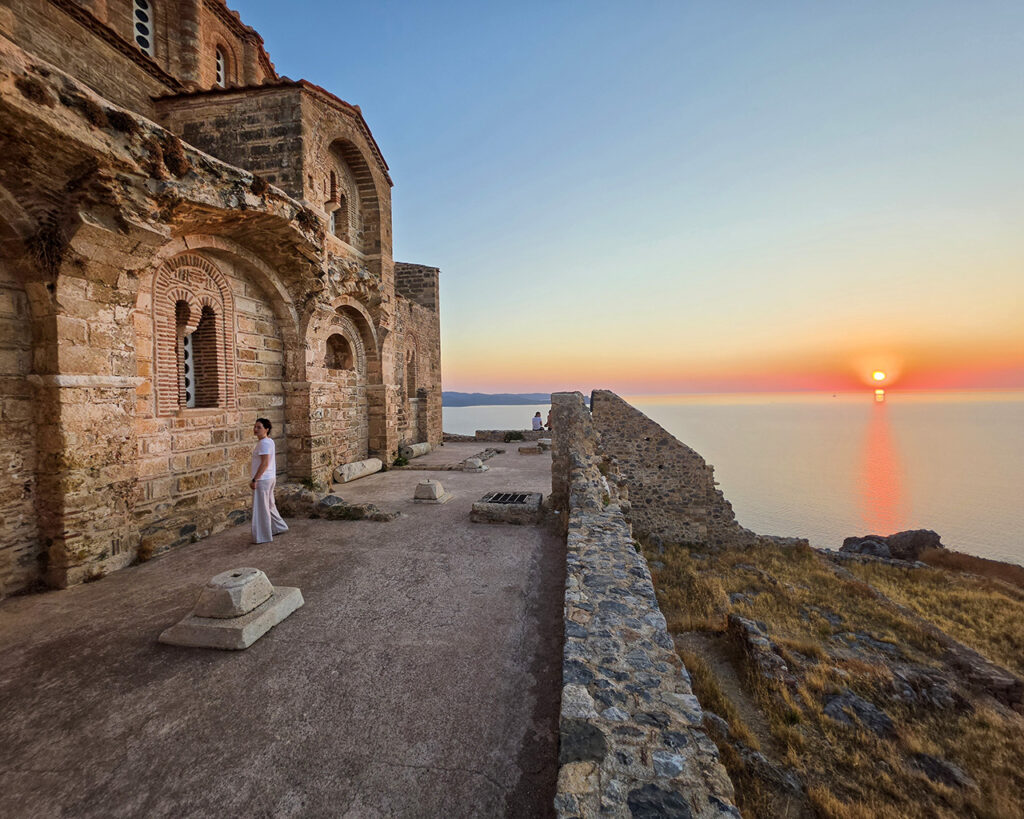
Agia Sophia is the main monument of the Upper Town, a church dating broadly from the 12th century, standing dramatically near the cliff edge. It shares its dedication with the great church in Constantinople but is its own building, not a copy of it.
Experience Monemvasia after the day visitors leave
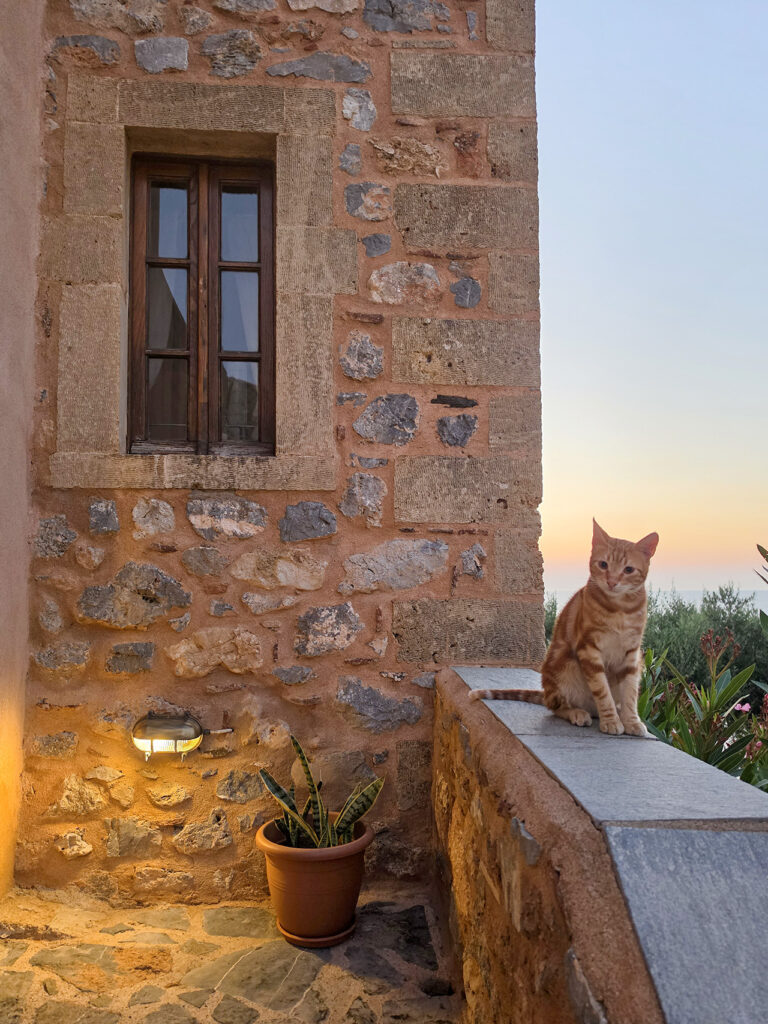
The town feels different once the day-trip coaches have gone. In the early morning and again after sunset, the lanes empty, the lamps come on and dinner in the Lower Town becomes part of the experience rather than a break from sightseeing. This shift is the main reason to stay overnight.
Try Malvasia wine and local Laconian food
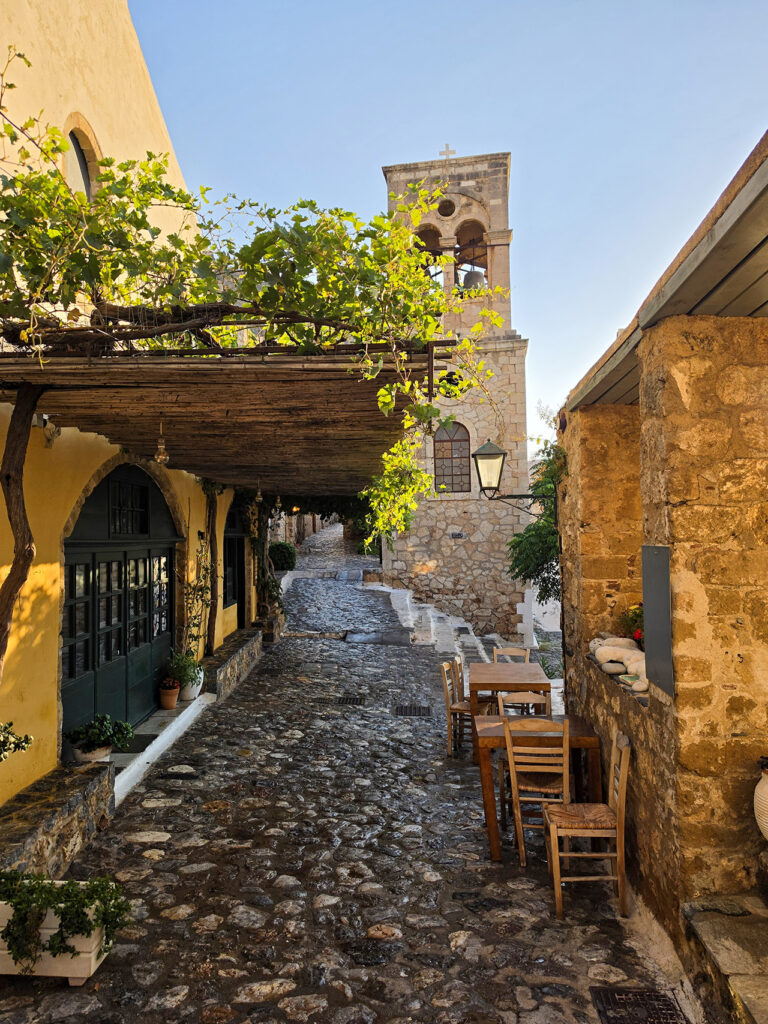
Monemvasia gave its name to Malvasia, the sweet wine historically shipped from here, and it is a natural thing to try locally. Laconian cooking also appears on menus: cured pork known as synglino, hand-rolled goges pasta, and sausages flavoured with orange are among the most approachable examples.
Swim at Portello or choose an easier nearby beach
There are two different swims to weigh up. Portello is a quick dip straight off the rocks inside the walls, atmospheric but exposed. For a proper beach with sand and space, you need to head out of the Castle Town — Pori and Xifias are among the nearer options, better suited to families and longer stops.
How many days do you need in Monemvasia?
It depends on how much of the rock you want to see, and whether you want the evening as well as the streets.
- Half-day: only a rushed introduction to the Lower Town.
- One full day: the Lower Town plus a few selected highlights.
- One night: meaningfully better than a day trip, with a quiet evening and morning.
- Two nights: recommended, enough for the Lower Town, the Upper Town and a relaxed evening.
- Three nights: useful only if you are adding beaches or regional excursions.
One thing to keep in mind: two nights do not always mean two full sightseeing days, since arrival and departure eat into the time on the rock.
Monemvasia itineraries
One-day Monemvasia itinerary
Arrive early, before the coaches, and walk in through the gate. Spend the morning in the Lower Town, taking in the Agora, the central square and the Archaeological Collection.
Break for lunch, then continue to Panagia Chrysafitissa and the sea walls. Add the Upper Town only if the weather, your footwear and your energy allow. If you can, stay until late afternoon or dinner, when the town quietens.
Two-day Monemvasia itinerary
Day one: arrive and settle into the Lower Town, see the central monuments, then walk out to Portello or along the sea walls, and spend the evening inside the Castle Town.
Day two: climb to the Upper Town early for Agia Sophia and the views, visit the Yiannis Ritsos Museum, take a relaxed lunch, and finish with a nearby beach or an easy afternoon in Gefyra.
Getting to Monemvasia
For most international visitors, a rental car is the most practical option. It gives you the flexibility to time your arrival, reach the beaches and combine Monemvasia with the rest of the Peloponnese.
From Athens, the drive normally takes about three and a half to four hours, depending on your starting point and traffic. Public buses may run from Athens, but timetables and connections change, so check current services rather than relying on fixed departure times.
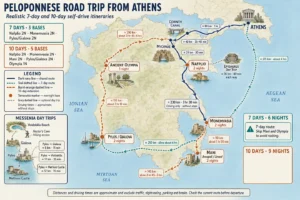
Kalamata Airport can suit some seasonal European routes, though it is not automatically the most convenient airport for every Monemvasia trip. For the wider picture, our guide to planning your Peloponnese road trip covers arrival, car hire and timing.
Best time to visit Monemvasia
Spring and autumn are the easiest seasons, both for sightseeing and for the Upper Town climb. Summer can be very hot on the exposed stone, and July and August are the busiest months.
Whenever you come, early morning and late afternoon are best for climbing, photography and quieter streets. Winter is atmospheric and calm, but some businesses run reduced hours, so check ahead.
Parking and getting into Monemvasia Castle
No cars are allowed inside the Castle Town, and this shapes every arrival. The few roadside spaces near the gate are extremely limited and often full, so driving straight to the entrance in high season is a gamble.
The more reliable approach is to park in Gefyra, or in an appropriate mainland parking area, and walk across towards the castle. A local minibus or shuttle sometimes operates, but do not count on a fixed timetable or year-round service — check the current arrangement locally before you arrive.
If you are staying inside the walls, plan for your luggage. You may need to carry or roll it over cobbles, uneven surfaces, slopes and steps, and there is no vehicle access to accommodation inside. Also check any parking restrictions in Gefyra before leaving the car for the day.
Accessibility and getting around on foot
Monemvasia is demanding underfoot. It is challenging for wheelchairs, pushchairs and anyone with reduced mobility or difficulty with uneven stone and stairs, and it would be wrong to describe the whole Castle Town as accessible.
That said, the main street and parts of the Lower Town can still be enjoyed by some visitors with limited mobility, depending on individual circumstances. The Upper Town is best treated as optional for families with very young children, older visitors, those with limited mobility, anyone visiting in extreme heat, and travellers without proper footwear.
Where to stay in Monemvasia
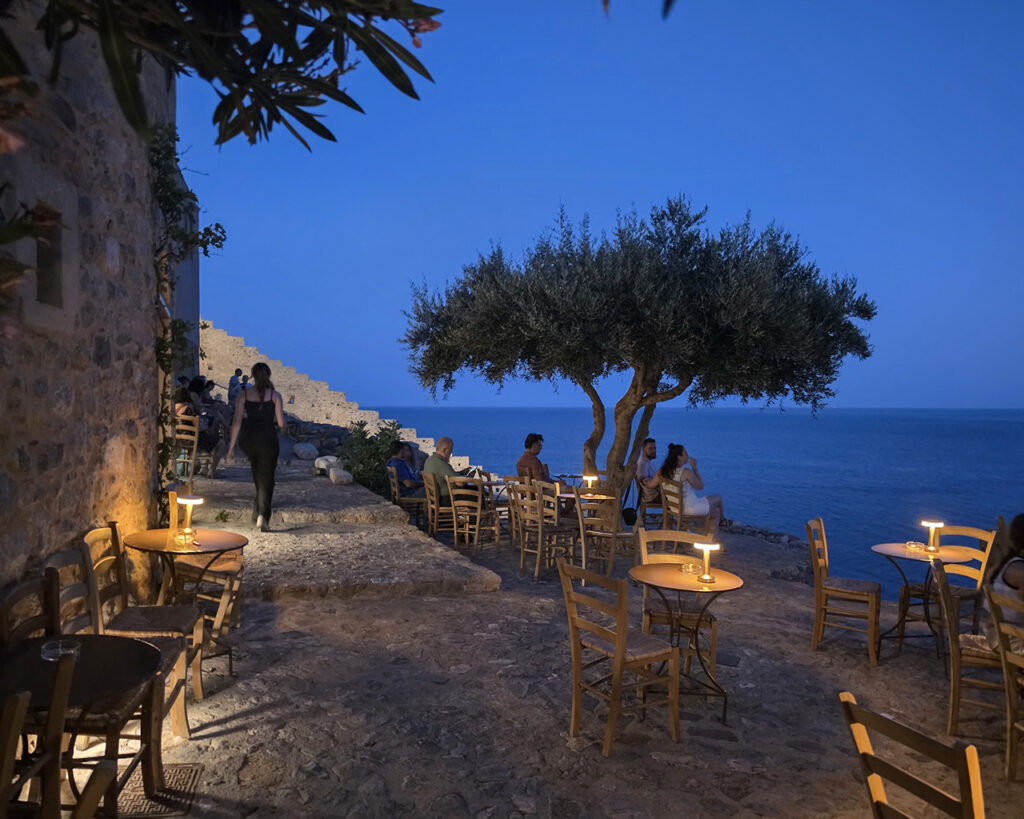
Where you sleep changes the trip more than almost any other decision here. There are three broad choices.
Inside the Castle Town
Best for atmosphere, evenings and early mornings — ideal for couples wanting a distinctive stay. The trade-offs are real: no vehicle access, luggage over steps and cobbles, sometimes compact historic rooms, and less convenience for daily road trips.
Gefyra
Best for easier parking, modern rooms, families, luggage and road trips, with simpler access to services and beaches. Its limitation is that it does not reproduce the overnight atmosphere inside the walls.
The outer coast
Worth a look if you want beaches, space and pools, and you value relaxation over being inside the Castle Town itself.
For a first visit centred on Monemvasia itself, staying inside the Castle Town offers the strongest experience. Choose Gefyra when parking, luggage, children or daily driving matter more.
See places to stay in Monemvasia
For the wider region, compare options in our guide on where to stay in the Peloponnese.
Best day trips from Monemvasia
Monemvasia works well as a base for a few nearby trips, once you have seen the rock itself.
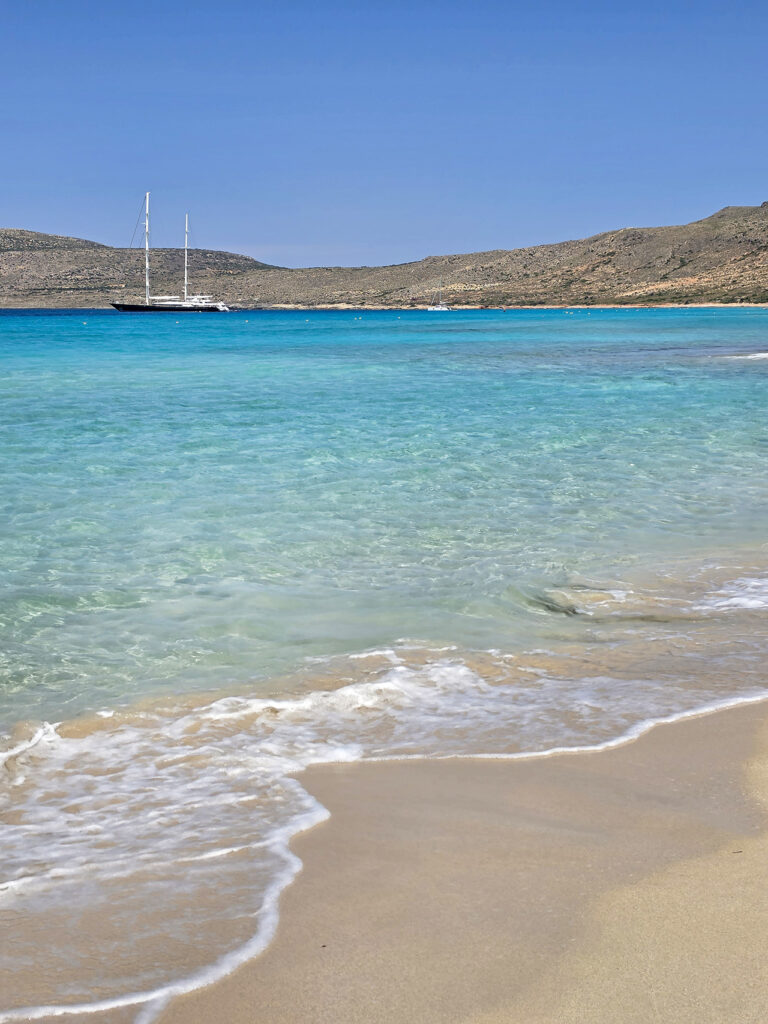
Elafonisos and Simos Beach: drive south from Monemvasia to the ferry point at Pounta, then take the short local car ferry to Elafonisos. The island suits beach lovers and easily fills most of a day once driving, the crossing and beach time are included. Ferry schedules change seasonally, so confirm the current Pounta–Elafonisos service before setting out.
Mystras: the Byzantine hill city near Sparta, a substantial archaeological site for anyone drawn to history. Allow most of a day, as there is a lot of ground and climbing.
Gerakas: a quiet fjord-like natural harbour and village, good for a slower half-day and a relaxed lunch by the water.
Kastania Cave: a decorated cave inland, a change of pace for part of a day; opening days can be limited, so confirm them before you go.
Frequently asked questions
What are the best things to do in Monemvasia?
Walk the Agora and the Lower Town lanes, see the central square and Elkomenos Christos, reach Panagia Chrysafitissa and the sea walls, climb to the Upper Town for Agia Sophia and the views, and stay for the quiet evening. Portello offers a rocky swim when conditions allow.
Is Monemvasia worth visiting?
Yes. It is one of the most distinctive inhabited castle towns in Greece, combining stone lanes, churches, sea walls and clifftop views. It is worth visiting as a day trip, but an overnight stay, when the streets empty, gives a noticeably fuller experience.
How many days do you need in Monemvasia?
One full day covers the Lower Town and a few highlights. Two nights is the recommended stay, allowing the Lower Town, the Upper Town and a relaxed evening. Add a third night only if you plan to include nearby beaches or regional excursions.
Can you drive inside Monemvasia Castle?
No. The Castle Town is car-free, and there is no vehicle access to accommodation inside the walls. You park on the mainland at Gefyra or a nearby parking area and continue on foot, or by the local shuttle when it is running.
Where should you park for Monemvasia?
Spaces near the gate are very limited and often full, so the reliable option is to park in Gefyra or an appropriate mainland area and walk across the causeway. Check local parking restrictions, and treat any minibus service as something to confirm on the day.
Is the Upper Town difficult to reach?
The climb is steep, uneven and exposed, with little shade, so it is not suitable for everyone. It is manageable for many visitors who take it early or late in the day, wear proper footwear and carry water, but it should be seen as optional rather than compulsory.
Should you stay inside the Castle Town or in Gefyra?
Stay inside the Castle Town for atmosphere and quiet mornings and evenings, if you can manage luggage over steps and cobbles. Choose Gefyra for easier parking, modern rooms, families and road trips. For a first visit focused on the rock, inside the walls is the stronger choice.
Can you swim in Monemvasia?
You can swim from the rocks around Portello inside the walls when the sea and weather allow, but it is not an organised beach, so do not assume that lifeguards or visitor facilities will be available. For sand and space, head to a beach outside the Castle Town, such as Pori or Xifias.
Is Monemvasia suitable for children?
Older children usually enjoy exploring the lanes and walls, but the cobbles, steps and exposed Upper Town path make it harder with very young children or pushchairs. Families often find Gefyra more practical as a base, with the Upper Town treated as optional.
What is the best time to visit Monemvasia?
Spring and autumn are the most comfortable for sightseeing and the climb. Summer is hot on the stone and busiest in July and August, so aim for early morning or late afternoon. Winter is quiet and atmospheric, though some businesses reduce their hours.
Planning the rest of your trip
Most visitors spend one or two days here, with two nights giving the best balance of the Lower Town, the Upper Town and a quiet evening. If Monemvasia is one stop on a longer route, our overview of the best Peloponnese resorts and destinations helps you decide where to go next.