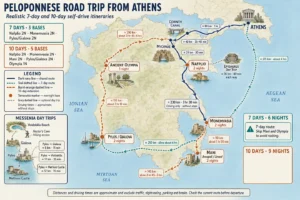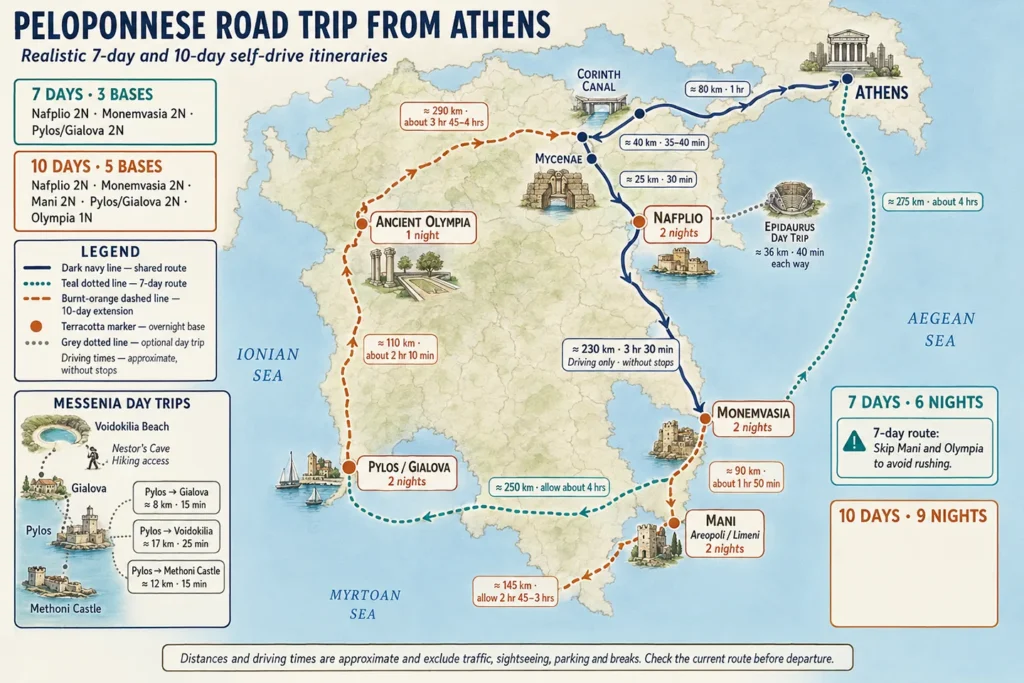
The biggest mistake when planning a Peloponnese road trip is trying to fit in too much. This guide gives two realistic self-drive routes from Athens: a seven-day trip using three bases — Nafplio, Monemvasia and Pylos or Gialova — and a ten-day trip that adds Mani and Ancient Olympia. Both begin and end in Athens and prioritise sensible overnight bases. Seven days means six nights; ten days, nine.
Which Peloponnese itinerary should you choose?
7-day route — three bases
Athens → Nafplio → Monemvasia → Pylos/Gialova → Athens. Six nights: Nafplio 2, Monemvasia 2, Pylos or Gialova 2.
Best for: first-time visitors; history and coastal scenery; travellers who prefer fewer hotel changes and accept one longer relocation.
Do not add Mani or Ancient Olympia unless you remove another base.
10-day route — five bases
Athens → Nafplio → Monemvasia → Mani → Pylos/Gialova → Ancient Olympia → Athens. Nine nights: Nafplio 2, Monemvasia 2, Mani 2, Pylos or Gialova 2, Ancient Olympia 1.
Best for: a broader southern circuit of historic towns, archaeological sites, beaches and scenic drives, for travellers comfortable with five bases.
The 10-day itinerary is better when you want a broader southern circuit, including Mani and Ancient Olympia, without turning every day into a long transfer.
Still deciding? Our overview of the best resorts and destinations in the Peloponnese helps you weigh the options.
Driving figures use central Athens as the reference point unless Athens Airport is stated separately; airport journeys are longer, and metropolitan traffic can materially change the result. Athens sightseeing days are not included in either itinerary.
7-day Peloponnese road trip itinerary
Day 1 — Athens to Nafplio via Mycenae
Route: Athens → optional Corinth Canal → Mycenae → Nafplio (approximately 140–145 km and about two hours of driving from central Athens, excluding every stop). Starting at Athens Airport increases the route to roughly 165–170 km before any sightseeing.
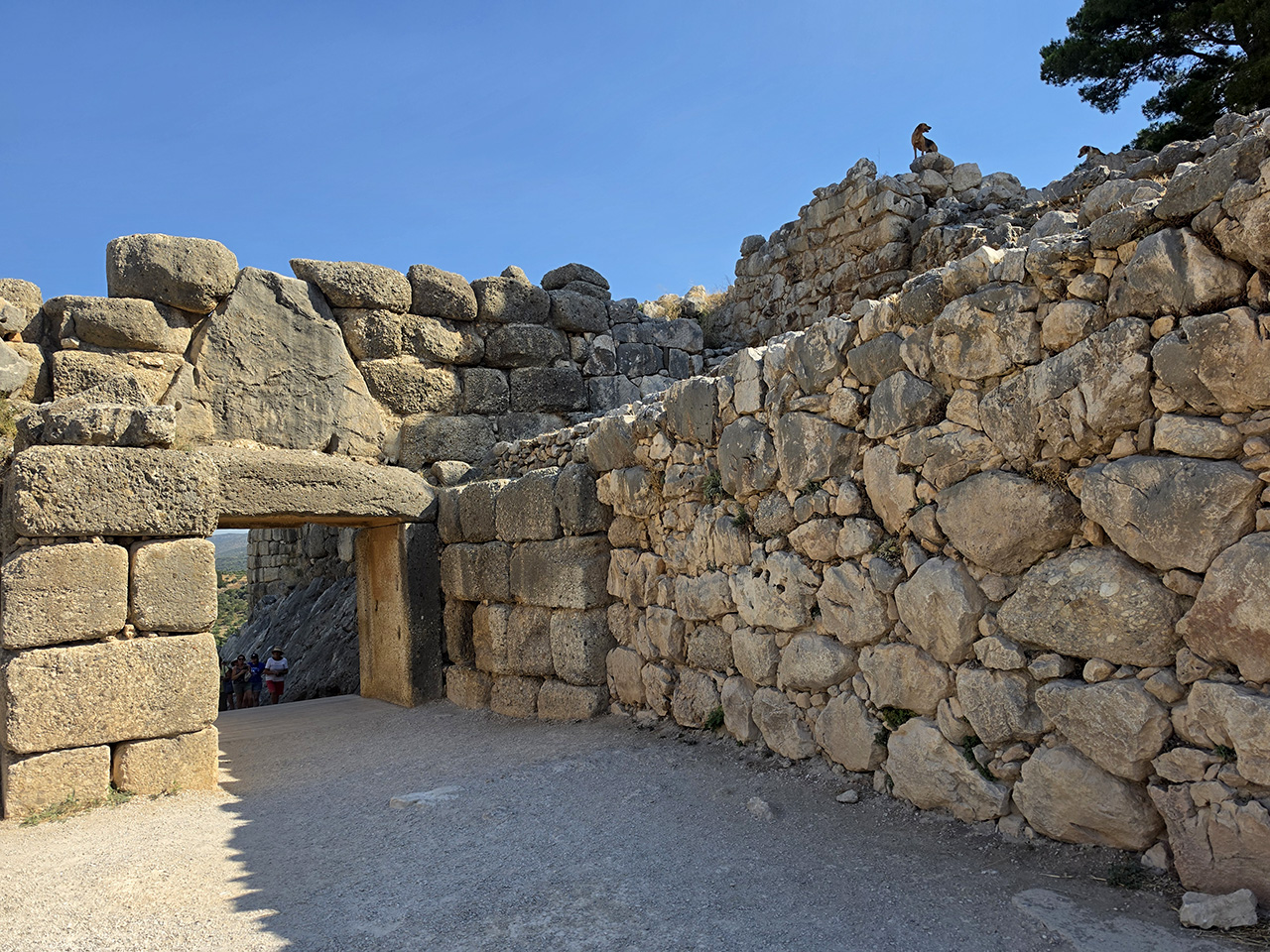
Stops: The Corinth Canal is a brief optional photo stop, not a half-day sight; Mycenae is the main archaeological visit. Don’t try to add Ancient Corinth and Acrocorinth as well.
Overnight: Nafplio.
Note: If you are starting immediately after a tiring flight, drive directly to Nafplio and move Mycenae to Day 2 or omit it. If Mycenae is moved to Day 2, choose between Mycenae and Epidaurus rather than attempting both alongside a full Nafplio visit.
Day 2 — Nafplio and Epidaurus
Route: Based in Nafplio; optional excursion to the Sanctuary of Asklepios and Ancient Theatre of Epidaurus — the inland site, not the coastal settlement (approximately 27 km and around 35 minutes each way under normal conditions).
Stops: Old Town, Palamidi Fortress and the waterfront fill a morning; Epidaurus can fit into the afternoon if you start early and confirm the current site hours.
Overnight: Nafplio (no move).
Note: For a slower day, stay in town and skip Epidaurus. Details in our complete Nafplio guide.

Day 3 — Nafplio to Monemvasia
Route: Nafplio → Monemvasia (approximately 230 km, with around 3 hours 25 minutes to 3 hours 30 minutes of driving before stops).
Stops: Minimal — keep detours light; this is a relocation, not a coastal hop.
Overnight: Monemvasia (or Gefyra).
Note: Allow time for the drive, parking and reaching the Castle Town on foot; arrive in daylight.

Day 4 — Monemvasia
Route: On foot in the Castle Town.
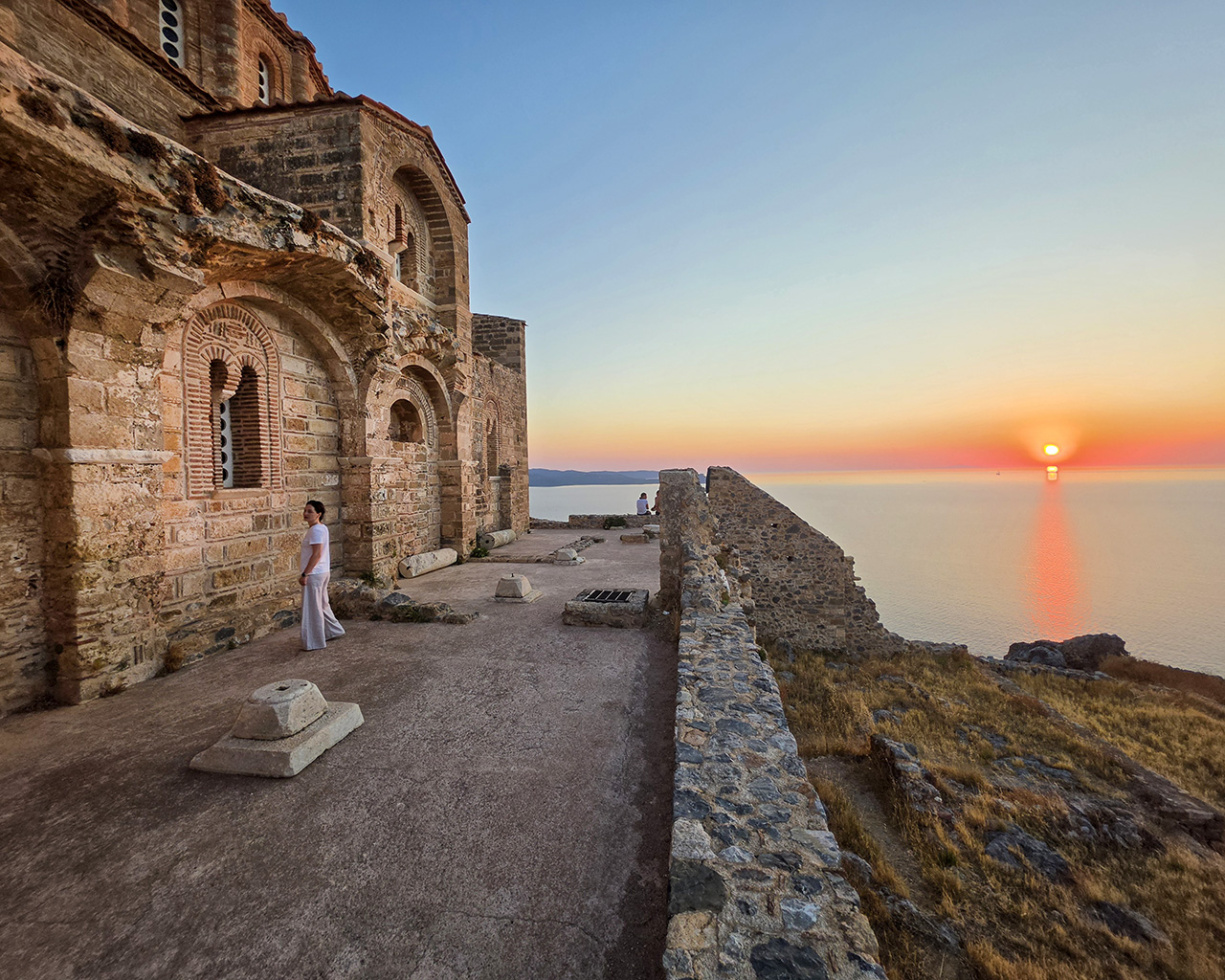
Stops: The Lower Town, the Upper Town and Agia Sofia where access allows, and the sea walls or Portello — best in the evening once day visitors leave.
Overnight: Monemvasia (no move).
Note: Plan arrival with our parking and castle access guide; for what to see, use the things to do in Monemvasia guide and the two-day itinerary.
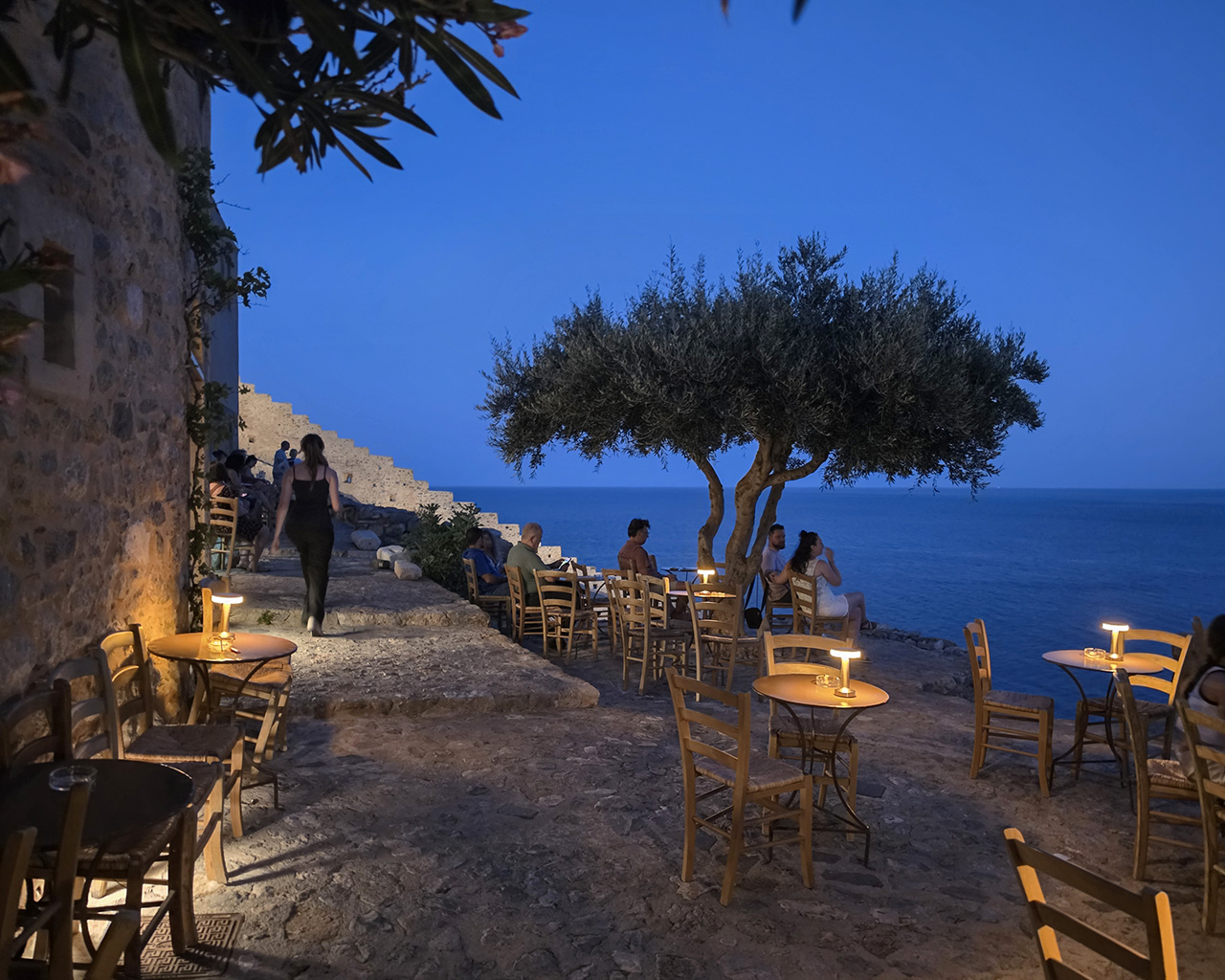
Day 5 — Monemvasia to Pylos or Gialova
Route: Monemvasia → Pylos/Gialova via Sparta and Kalamata. Pylos is approximately 191 km (around 3 hours 35–45 minutes of driving before stops); Gialova is approximately 189 km (around 3 hours 35 minutes). Allow at least about 4 hours 15 minutes once a break and local arrival are included.
Stops: The longest, most tiring relocation in the seven-day route — keep sightseeing minimal.
Overnight: Pylos or Gialova.
Note: Leave early, arrive in daylight, and don’t fit a Mani loop into this transfer.

Day 6 — Pylos, Voidokilia and Methoni
Route: Short local drives around Navarino Bay.
Stops: Voidokilia lies north of Gialova, while Methoni Castle is south of Pylos. Nestor’s Cave is not officially open to visitors, and Paleokastro does not operate as a normally managed visitor attraction. Follow current signs and do not enter closed or unsafe areas.
Overnight: Pylos or Gialova (no move).
Note: See our guides to Pylos, Gialova and Voidokilia, Voidokilia Beach and Methoni Castle. Don’t assume every stop fits comfortably into a single day.

Day 7 — Pylos or Gialova to Athens
Route: Pylos or Gialova to central Athens is approximately 270–275 km and around 3 hours 25–30 minutes of driving before stops. Continue towards Athens Airport only after allowing additional distance, metropolitan traffic and rental-car return time.
Stops: Primarily a return-driving day.
Overnight: Athens or the airport area.
Note: Check current conditions, allow time to return the car, and don’t schedule a tight flight after a long transfer or add Olympia as a casual stop today.
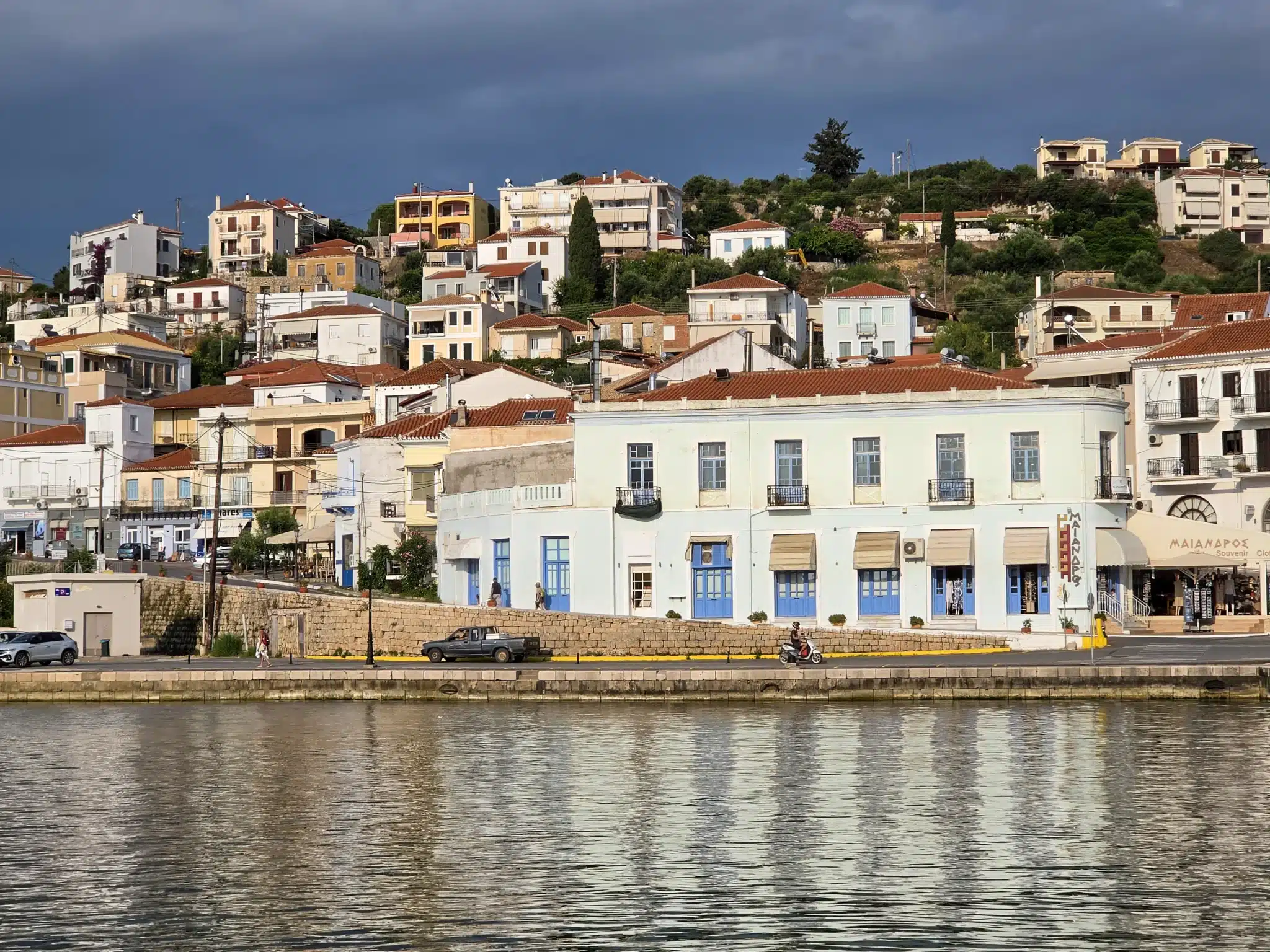
Why Mani and Ancient Olympia aren’t in the seven-day route
Adding both would mean too many one-night stays, long relocation days, too little time in Nafplio, Monemvasia or Messenia, and a rushed return to Athens. If you want them in a week, swap something out: replace Pylos/Gialova with Mani, or drop a cluster and stay near Olympia.
10-day Peloponnese road trip itinerary
Days 1–4 follow the same Nafplio and Monemvasia sequence described above:
Day 1: Athens → Mycenae → Nafplio (2 nights).
Day 2: Nafplio Old Town, Palamidi and an optional Epidaurus excursion.
Day 3: Nafplio → Monemvasia (approximately 230 km).
Day 4: Monemvasia Castle Town, the Upper Town and Agia Sofia.
Day 5 — Monemvasia to Mani
Route: Monemvasia → Areopoli (approximately 89–90 km and around 1 hour 50 minutes to two hours of driving).
Stops: An optional Gythio stop works only if it doesn’t overload the day.
Overnight: Mani — Areopoli or Limeni as bases for exploring central and Deep Mani; Kardamyli only if you prefer the northern end and its different route.
Note: Kardamyli, Limeni and Gerolimenas are not interchangeable or adjacent — choose a base deliberately.
Day 6 — Explore Mani
Route: A selective loop from your base.
Stops: Areopoli, Limeni, a few tower-house villages, the Diros Caves if access and opening times are confirmed, and Cape Tainaron only if you accept the extra driving and walking.
Overnight: Mani (no move).
Note: Don’t try to do all of it in one day; deep Mani roads are slow.
Day 7 — Mani to Pylos or Gialova
Route: Mani → Pylos/Gialova via Kalamata. From Areopoli or Limeni, Pylos is approximately 125–130 km and usually about 2 hours 45 minutes to three hours of driving before stops. From Kardamyli, it is approximately 83 km and around 1 hour 50 minutes.
Stops: Kalamata or Kardamyli only if they sit naturally on your route — avoid backtracking. See our Kalamata guide.
Overnight: Pylos or Gialova.
Note: Drives from Gerolimenas or farther south require separate calculation and take longer.
Day 8 — Pylos, Voidokilia and Methoni
Route: Local drives around Navarino Bay, as on Day 6 of the shorter route.
Stops: Choose your priority — beaches and landscape (Voidokilia and the Gialova area) or history (Pylos and Methoni Castle).
Overnight: Pylos or Gialova (no move).
Note: Treat the Paleokastro area only as an optional, rough and exposed approach where current signs and restrictions permit. Nestor’s Cave is not officially open to visitors and should not be entered.
Day 9 — Pylos/Gialova to Ancient Olympia
Route: Ancient Olympia is approximately 110 km and just over two hours from Pylos; from Gialova it is closer to 100 km, with a broadly similar duration.
Stops: Olympia is a substantial site, not a photo stop — allow a half-day for it and the Archaeological Museum where hours permit.
Overnight: Ancient Olympia (1 night).
Note: Leave early and check current opening hours and tickets first. Olympia is in Elis, in the western Peloponnese — not Arcadia.
Day 10 — Ancient Olympia to Athens
Route: Ancient Olympia → Athens using the main road and motorway route. Central Athens is approximately 262 km and around 3 hours 40 minutes; Athens Airport is approximately 292 km and around 3 hours 55 minutes before traffic and rental return.
Stops: Plan a break and a fuel stop.
Overnight: Athens or the airport area.
Note: The airport figure excludes the time required for refuelling, returning the rental car and reaching the terminal. Don’t combine an early site visit, the full drive and a tightly scheduled international flight — leave a clear buffer.
Where should you stay during the road trip?
Book each base separately as you confirm the route. Our best places to stay in the Peloponnese guide compares every area; the cards below cover the road-trip logic.
Some accommodation links are affiliate links. If you book through them, we may earn a small commission at no extra cost to you.
1. Nafplio
Two nights. The Old Town is walkable and atmospheric, but pedestrian lanes mean parking is often a short walk away — ask your hotel. Compare areas in our where to stay in Nafplio guide.
See accommodation in Nafplio2. Monemvasia
Two nights. Staying inside the Castle Town gives the strongest experience, but there are no cars inside and luggage is carried on foot over cobbles and steps. Gefyra, on the mainland side of the causeway, is more practical for drivers.
See accommodation in Monemvasia3. Mani (10-day route only)
Two nights. Your choice of base changes daily driving significantly. Areopoli or Limeni work as bases for exploring central and Deep Mani, but the exact choice should reflect the places included in your itinerary; Kardamyli suits northern Mani and a different route. They are not close together, so pick one and plan around it.
4. Pylos or Gialova
Two nights. Pylos is the larger town base with tavernas and services; Gialova is smaller and handy for the northern coast around Voidokilia and the lagoon. Choose by town amenities or quick beach access.
See accommodation in Pylos5. Ancient Olympia (10-day route only)
One night. A practical final overnight before the return drive to Athens, letting you reach the site early. The village is small and geared to visitors. If you want to reach the archaeological site on foot, check the property’s exact map position and walking route before booking. Do not assume that every accommodation marketed under Ancient Olympia is within an easy walk.
Driving in the Peloponnese: what to know
A rental car is effectively necessary; public transport won’t link the bases sensibly. Collect it as you leave Athens — airport collection is often easier than a downtown office.
Confirm licence and International Driving Permit requirements for your nationality, and read the insurance excess, exclusions and additional-driver policy. Photograph the car at collection. Expect tolls on the motorway sections, and don’t assume every small village has a fuel station — refuel before mountainous or remote stretches and watch your range. Download offline maps, as signal drops in the hills.
Treat every driving time here as a no-stop minimum that excludes parking, food, fuel, sightseeing, traffic and check-in. Don’t assume roadside or Old Town parking is free or available; ask each hotel for exact arrival and parking instructions, and never leave visible luggage in the car. Tolls, fuel prices and rental rules change, so verify current details when you book.
When to take the road trip
Spring and autumn generally offer the most comfortable balance for driving and archaeological visits. Late spring and early autumn can also allow beach time, but weather and sea temperature vary. Summer brings strong heat, busy roads and real parking pressure in towns such as Nafplio and Monemvasia. Winter suits a town-and-archaeology trip, but check daylight, weather and seasonal closures — some beach businesses, boat trips and smaller sites reduce hours or shut. Confirm archaeological opening times, cave access and boat services before building a day around them.
Peloponnese road trip FAQ
How many days do you need for a Peloponnese road trip?
Seven days (six nights) suits Nafplio, Monemvasia and Pylos or Gialova. Ten days (nine nights) adds Mani and Ancient Olympia without a one-night dash. With fewer than seven days, reduce the number of bases and choose a more selective route rather than compressing this entire itinerary.
Is seven days enough for the Peloponnese?
For three bases, yes — Nafplio, Monemvasia and Messenia. It isn’t enough for a relaxed trip that also includes Mani and Olympia, which forces one-night stays. Choose ten days for the fuller circuit.
Can you drive around the Peloponnese from Athens?
Yes. Both routes start and end in Athens, and a rental car is effectively necessary. Collect it as you leave the city, and expect tolls on the motorway sections.
Should you include Mani in a seven-day itinerary?
Only by removing another base. Adding it to the three-base week creates too many moves — either swap Pylos/Gialova for Mani, or keep Mani for the ten-day route.
Where should you stay on a Peloponnese road trip?
In the bases set out above for each route. Monemvasia’s Castle Town is the most atmospheric choice, while Gefyra, on the mainland side, is easier for drivers; elsewhere, book close to where each day starts.
Is it better to drive clockwise or anticlockwise around the Peloponnese?
Route order matters less than avoiding backtracking. The Athens–Nafplio–Monemvasia–west coast sequence here is geographically coherent and ends with an efficient return to Athens.